
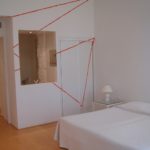



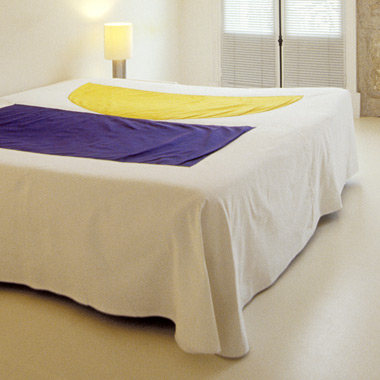
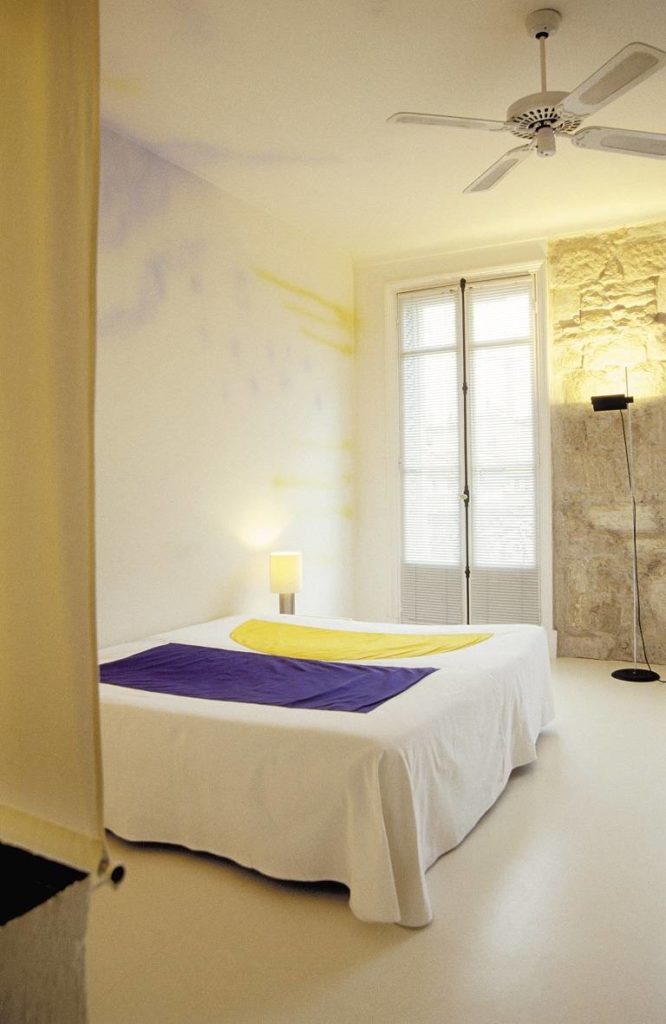
These paintings all begin with a surface intended to cover a large portion of one of the exhibition walls. This initial support (here, wood) is cut into X irregular pieces (here, 24), following the model of jigsaw puzzles that most often depict landscapes, animals, or famous paintings. Several modes of installation are possible. The elements may be distributed alternately across two facing walls, each forming a positive/negative arrangement. One series of elements on a wall indicates the boundaries and general shape of the room, while the remaining pieces are dispersed throughout the space.
As with all the definitions/methods conceived since 1973:
The pieces are painted the same color as the wall on which they are hung. If the wall is left raw, the support will remain raw as well.
When moved to a different location, this painting may take on an entirely different form: different dimensions, a different cut, a different color, a different installation, a different support.
Nothing remains fixed from one place to another, even though everything is decided in advance.
A painting that does not suffer the ravages of time.
A coat of paint, a touch of youth. A painting with a limited duration—and that, forever.
Claude Rutault.
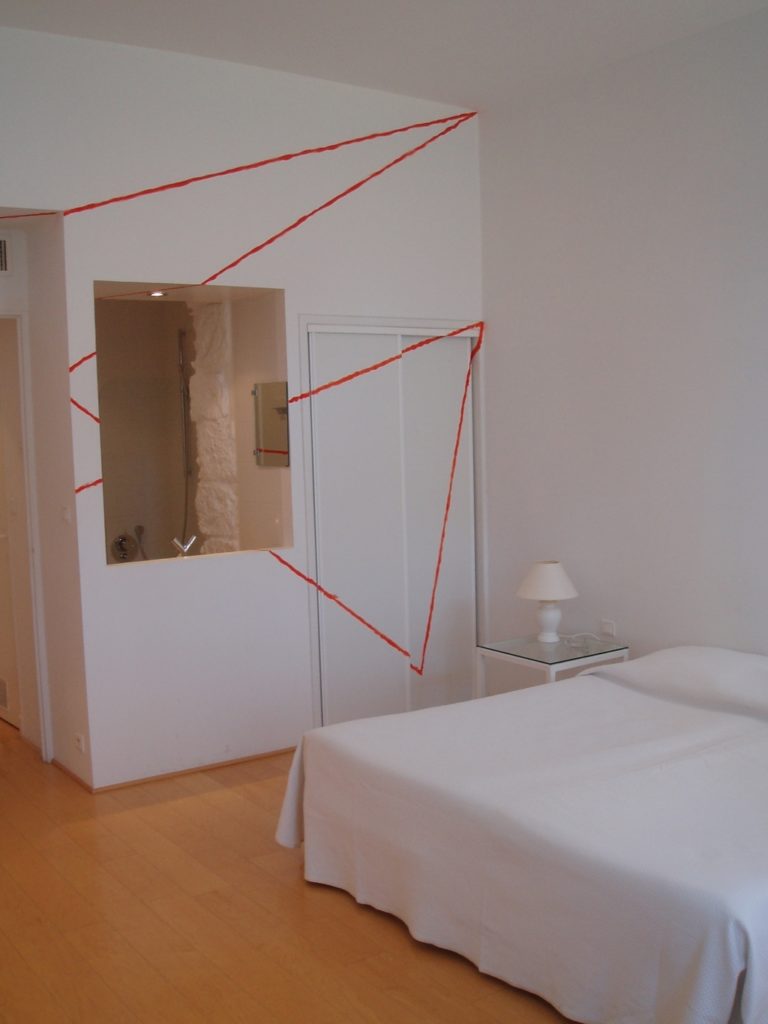
These paintings all begin with a surface intended to cover a large portion of one of the exhibition walls. This initial support (here, wood) is cut into X irregular pieces (here, 24), following the model of jigsaw puzzles that most often depict landscapes, animals, or famous paintings. Several modes of installation are possible. The elements may be distributed alternately across two facing walls, each forming a positive/negative arrangement. One series of elements on a wall indicates the boundaries and general shape of the room, while the remaining pieces are dispersed throughout the space.
As with all the definitions/methods conceived since 1973:
The pieces are painted the same color as the wall on which they are hung. If the wall is left raw, the support will remain raw as well.
When moved to a different location, this painting may take on an entirely different form: different dimensions, a different cut, a different color, a different installation, a different support.
Nothing remains fixed from one place to another, even though everything is decided in advance.
A painting that does not suffer the ravages of time.
A coat of paint, a touch of youth. A painting with a limited duration—and that, forever.
Claude Rutault.
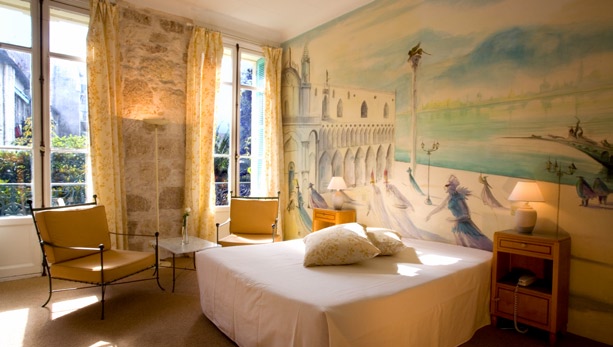
Nights in the colors of escape, for you, stationary travelers of the Windsor Hotel.
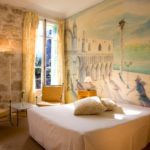
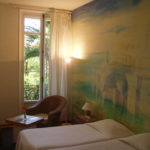
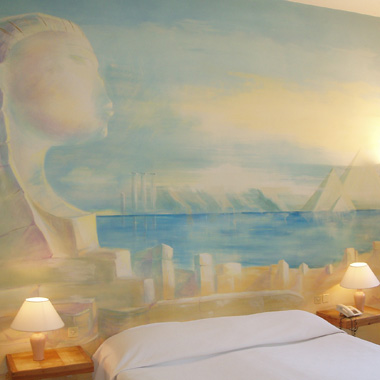
Antoine BAUDOIN had not visited all the countries that nourished his murals, but at the tip of his brushes, his generous virtuosity was the very essence of his painting. Thus, like in an oriental tale, a picture book where characters merge with landscapes near and far, these airy murals draw you in, into a world whose scents and music you sense, filling your senses and dreams.
Egypt, India, Japan, a garden by Douanier Rousseau, the Promenade des Anglais… Or even Spain of Don Quixote, sketched with pencil…
And the blur flows into the texture of the wall. Which eventually ceases to exist.
Solid transparency, inner strength, under the relevance of the brush.
He was barely twenty, Antoine, the impish spirit who would soon depart for other stars, leaving us the grace of his inner worlds.
Have a beautiful journey, Sir, Madam!
Paulette BAUDOIN (sister of the artist), August 2020
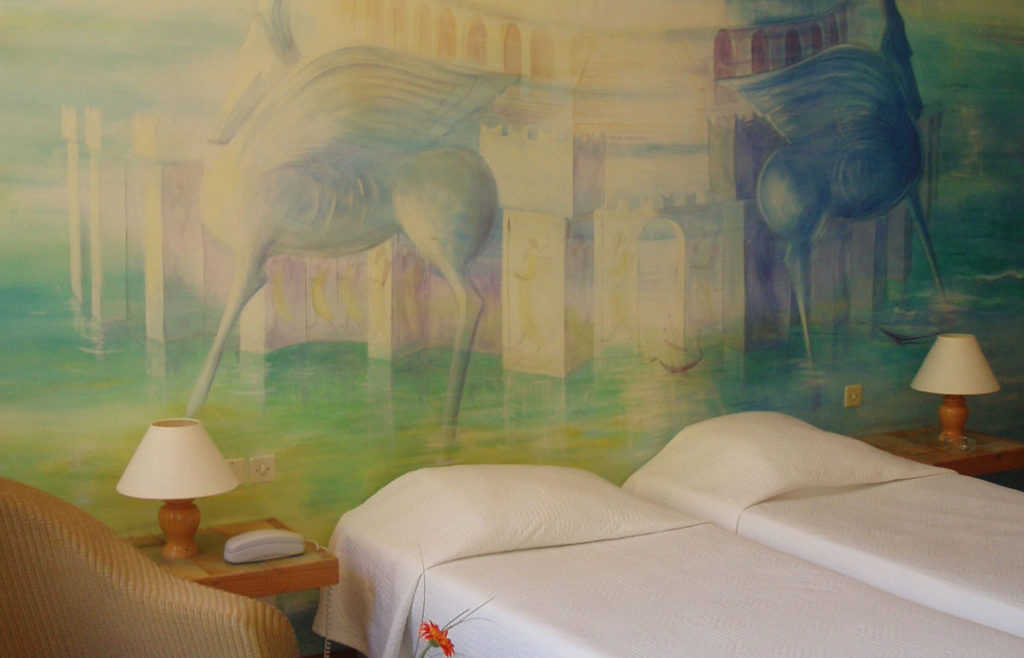
Nights in the colors of escape, for you, stationary travelers of the Windsor Hotel.
Antoine BAUDOIN had not visited all the countries that nourished his murals, but at the tip of his brushes, his generous virtuosity was the very essence of his painting. Thus, like in an oriental tale, a picture book where characters merge with landscapes near and far, these airy murals draw you in, into a world whose scents and music you sense, filling your senses and dreams.
Egypt, India, Japan, a garden by Douanier Rousseau, the Promenade des Anglais… Or even Spain of Don Quixote, sketched with pencil…
And the blur flows into the texture of the wall. Which eventually ceases to exist.
Solid transparency, inner strength, under the relevance of the brush.
He was barely twenty, Antoine, the impish spirit who would soon depart for other stars, leaving us the grace of his inner worlds.
Have a beautiful journey, Sir, Madam!
Paulette BAUDOIN (sister of the artist), August 2020
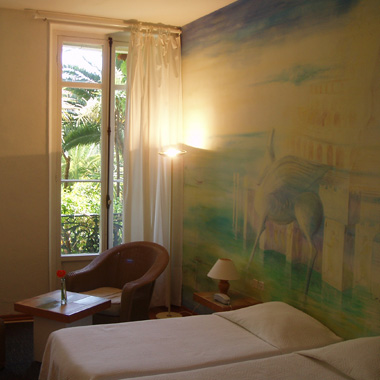
Nights in the colors of escape, for you, stationary travelers of the Windsor Hotel.
Antoine BAUDOIN had not visited all the countries that nourished his murals, but at the tip of his brushes, his generous virtuosity was the very essence of his painting. Thus, like in an oriental tale, a picture book where characters merge with landscapes near and far, these airy murals draw you in, into a world whose scents and music you sense, filling your senses and dreams.
Egypt, India, Japan, a garden by Douanier Rousseau, the Promenade des Anglais… Or even Spain of Don Quixote, sketched with pencil…
And the blur flows into the texture of the wall. Which eventually ceases to exist.
Solid transparency, inner strength, under the relevance of the brush.
He was barely twenty, Antoine, the impish spirit who would soon depart for other stars, leaving us the grace of his inner worlds.
Have a beautiful journey, Sir, Madam!
Paulette BAUDOIN (sister of the artist), August 2020
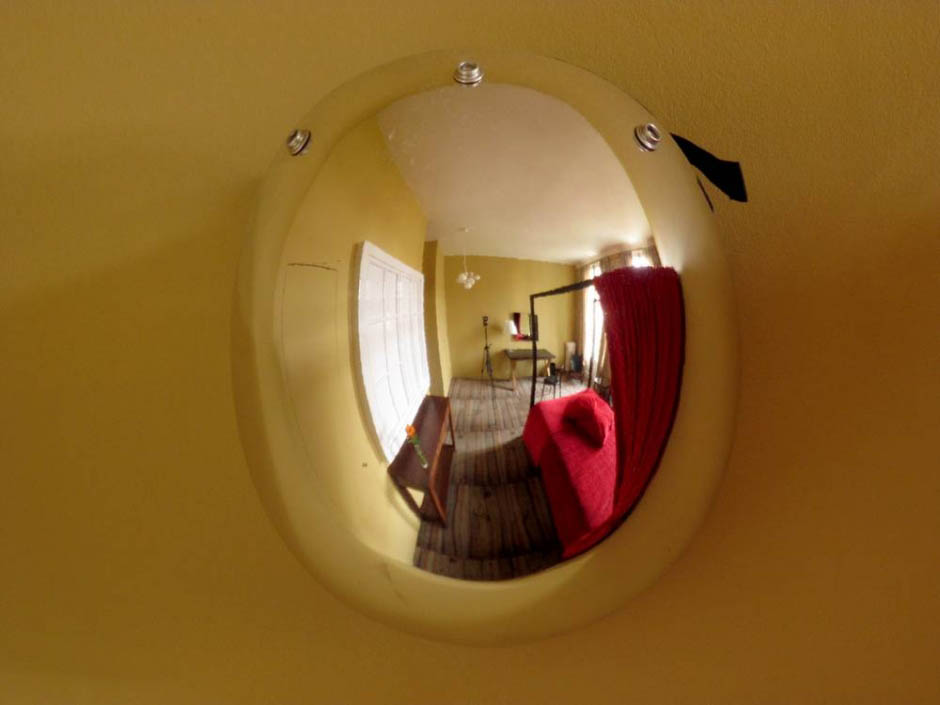
Here, Jan van Eyck’s The Arnolfini Portrait (1434) serves as the model for the staging.
While reusing elements previously presented at the Venice Biennale, Mathieu Mercier recreates here, at the Hotel Windsor, the atmosphere of a certain kind of happiness.
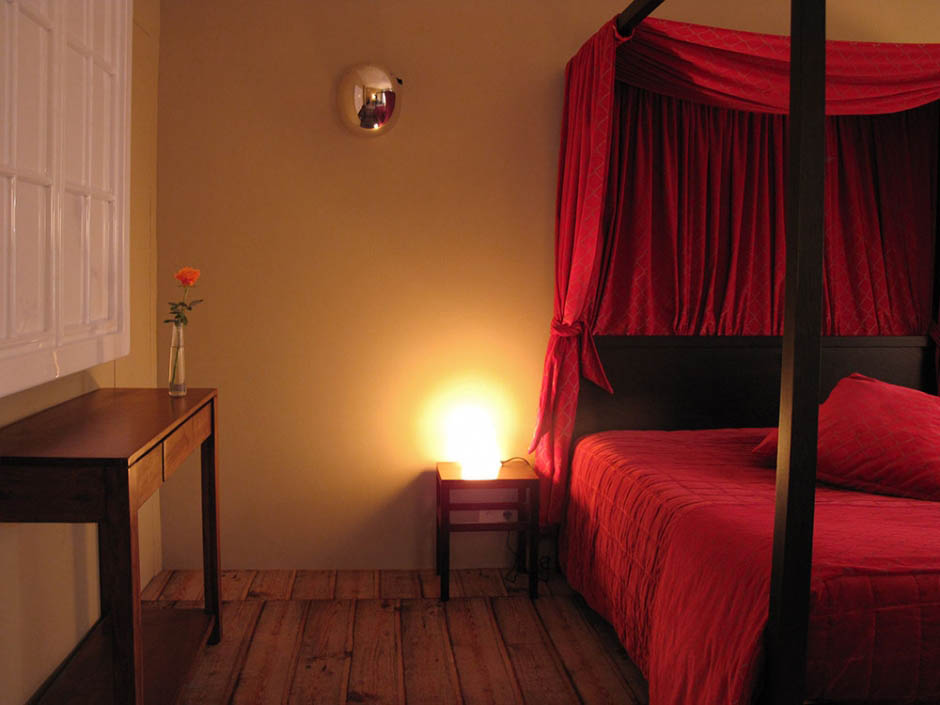
Here, Jan van Eyck’s The Arnolfini Portrait (1434) serves as the model for the staging.
While reusing elements previously presented at the Venice Biennale, Mathieu Mercier recreates here, at the Hotel Windsor, the atmosphere of a certain kind of happiness.
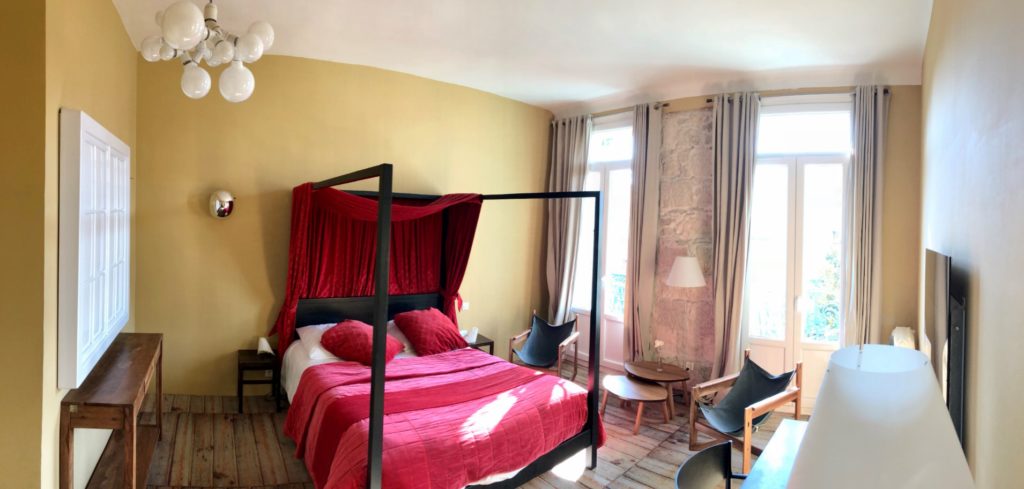
Here, Jan van Eyck’s The Arnolfini Portrait (1434) serves as the model for the staging.
While reusing elements previously presented at the Venice Biennale, Mathieu Mercier recreates here, at the Hotel Windsor, the atmosphere of a certain kind of happiness.
A Hotel in Its Own Right
Se non è vero, è ben trovato—even if it is not true, it is a good story. Legend has it that when the artist Picasso arrived in the South of France, he stayed in a hotel in Mougins. And, as was his habit, he used the walls of his room for sketches and studies; in short, he covered the wall with his art.
When Monsieur Picasso finally found a house that suited him, he left the hotel, and the owner asked him to restore the room to the condition in which he had found it. In other words, Picasso hired a house painter to cover over his work. This happened nearly fifty years ago.
In the meantime, Pablo Picasso became world-famous, and his work has become a priceless commodity. I never knew the hotel owner, but I have been told that he was devastated, deeply sorry that he had failed to recognize the talent of his guest.
The Hotel Windsor is different. Its owner invited artists to intervene, to contribute their ideas and give the hotel a modern and personal character. Monsieur Bernard Redolfi-Strizzot is convinced—and I believe he is right—that a hotel can and should be part of a city’s cultural heritage.
He is convinced that we must make an effort on behalf of the art of our own time. He is convinced that we must live with art in order to connect with it more deeply and better perceive the message it brings us. Indeed, a single annual visit to a museum is not enough. And if art is the soul of a society, then it must be cultivated and made accessible to everyone.
Yes, art bears witness to our history; art is the mirror of our civilization. Without that mirror, without art, we would have no trace of our cultures.
It is true that the museum is a substitute. The cultures of the past had no need for museums. Their museum was the entire city: its architecture, its landscape, its furnishings, its decorations, and its art.
Gottfried Honegger.
A Hotel in Its Own Right
Se non è vero, è ben trovato—even if it is not true, it is a good story. Legend has it that when the artist Picasso arrived in the South of France, he stayed in a hotel in Mougins. And, as was his habit, he used the walls of his room for sketches and studies; in short, he covered the wall with his art.
When Monsieur Picasso finally found a house that suited him, he left the hotel, and the owner asked him to restore the room to the condition in which he had found it. In other words, Picasso hired a house painter to cover over his work. This happened nearly fifty years ago.
In the meantime, Pablo Picasso became world-famous, and his work has become a priceless commodity. I never knew the hotel owner, but I have been told that he was devastated, deeply sorry that he had failed to recognize the talent of his guest.
The Hotel Windsor is different. Its owner invited artists to intervene, to contribute their ideas and give the hotel a modern and personal character. Monsieur Bernard Redolfi-Strizzot is convinced—and I believe he is right—that a hotel can and should be part of a city’s cultural heritage.
He is convinced that we must make an effort on behalf of the art of our own time. He is convinced that we must live with art in order to connect with it more deeply and better perceive the message it brings us. Indeed, a single annual visit to a museum is not enough. And if art is the soul of a society, then it must be cultivated and made accessible to everyone.
Yes, art bears witness to our history; art is the mirror of our civilization. Without that mirror, without art, we would have no trace of our cultures.
It is true that the museum is a substitute. The cultures of the past had no need for museums. Their museum was the entire city: its architecture, its landscape, its furnishings, its decorations, and its art.
Gottfried Honegger.
Konstantin Sgouridis is a visual artist whose largely figurative and expressive practice embraces multiple media to explore the terrain of psychoanalysis, while fully assuming an aesthetic that is often kitsch or decorative. Drawing inspiration from mythology and popular culture, his work stages fantasized women and animals.
One might consider that, in this body of work, the artist revisits the universe of Jean Cocteau by engaging with his recurring themes: mythological creatures, a theatrical aesthetic, and the symbolic dimension of body language.
Konstantin Sgouridis is a visual artist whose largely figurative and expressive practice embraces multiple media to explore the terrain of psychoanalysis, while fully assuming an aesthetic that is often kitsch or decorative. Drawing inspiration from mythology and popular culture, his work stages fantasized women and animals.
One might consider that, in this body of work, the artist revisits the universe of Jean Cocteau by engaging with his recurring themes: mythological creatures, a theatrical aesthetic, and the symbolic dimension of body language.
Konstantin Sgouridis is a visual artist whose largely figurative and expressive practice embraces multiple media to explore the terrain of psychoanalysis, while fully assuming an aesthetic that is often kitsch or decorative. Drawing inspiration from mythology and popular culture, his work stages fantasized women and animals.
One might consider that, in this body of work, the artist revisits the universe of Jean Cocteau by engaging with his recurring themes: mythological creatures, a theatrical aesthetic, and the symbolic dimension of body language.
Nights in the colors of escape, for you, stationary travelers of the Windsor Hotel.
Antoine BAUDOIN had not visited all the countries that nourished his murals, but at the tip of his brushes, his generous virtuosity was the very essence of his painting. Thus, like in an oriental tale, a picture book where characters merge with landscapes near and far, these airy murals draw you in, into a world whose scents and music you sense, filling your senses and dreams.
Egypt, India, Japan, a garden by Douanier Rousseau, the Promenade des Anglais… Or even Spain of Don Quixote, sketched with pencil…
And the blur flows into the texture of the wall. Which eventually ceases to exist.
Solid transparency, inner strength, under the relevance of the brush.
He was barely twenty, Antoine, the impish spirit who would soon depart for other stars, leaving us the grace of his inner worlds.
Have a beautiful journey, Sir, Madam!
Paulette BAUDOIN (sister of the artist), August 2020
Nights in the colors of escape, for you, stationary travelers of the Windsor Hotel.
Antoine BAUDOIN had not visited all the countries that nourished his murals, but at the tip of his brushes, his generous virtuosity was the very essence of his painting. Thus, like in an oriental tale, a picture book where characters merge with landscapes near and far, these airy murals draw you in, into a world whose scents and music you sense, filling your senses and dreams.
Egypt, India, Japan, a garden by Douanier Rousseau, the Promenade des Anglais… Or even Spain of Don Quixote, sketched with pencil…
And the blur flows into the texture of the wall. Which eventually ceases to exist.
Solid transparency, inner strength, under the relevance of the brush.
He was barely twenty, Antoine, the impish spirit who would soon depart for other stars, leaving us the grace of his inner worlds.
Have a beautiful journey, Sir, Madam!
Paulette BAUDOIN (sister of the artist), August 2020


Rates
Services
 Climatisation
 Coffre-fort
 Free Wifi
 Mini Frigo
 Sèche-cheveux
 Téléphone
 TV Satellite
Seasons
Low Season02/01/2026 au 31/03/2026 et 01/11/2026 au 30/12/2026
Mid-season01/04/2026 - 30/04/2026 et 01/10/2026 - 31/10/2026
High-season01/05/2026 - 30/09/2026 et 31/12/2026 - 03/01/2027
Except Monaco Grand Prix04/06/2026 - 07/06/2026
Extras
Taxe de séjour3.48 € P.P
Petit déjeuner buffet19 € P.P
Petit-déjeuner continental servi en salle13 € P.P
Demi-Pension53 € P.P
Lit supplémentaire30 € / nuit
Lit bébé12 € / nuit
Chien (interdit au restaurant et dans le jardin)12 € / nuit