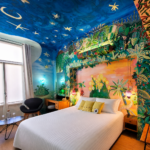
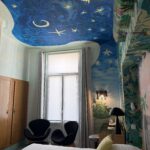
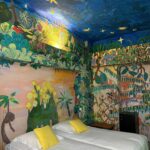
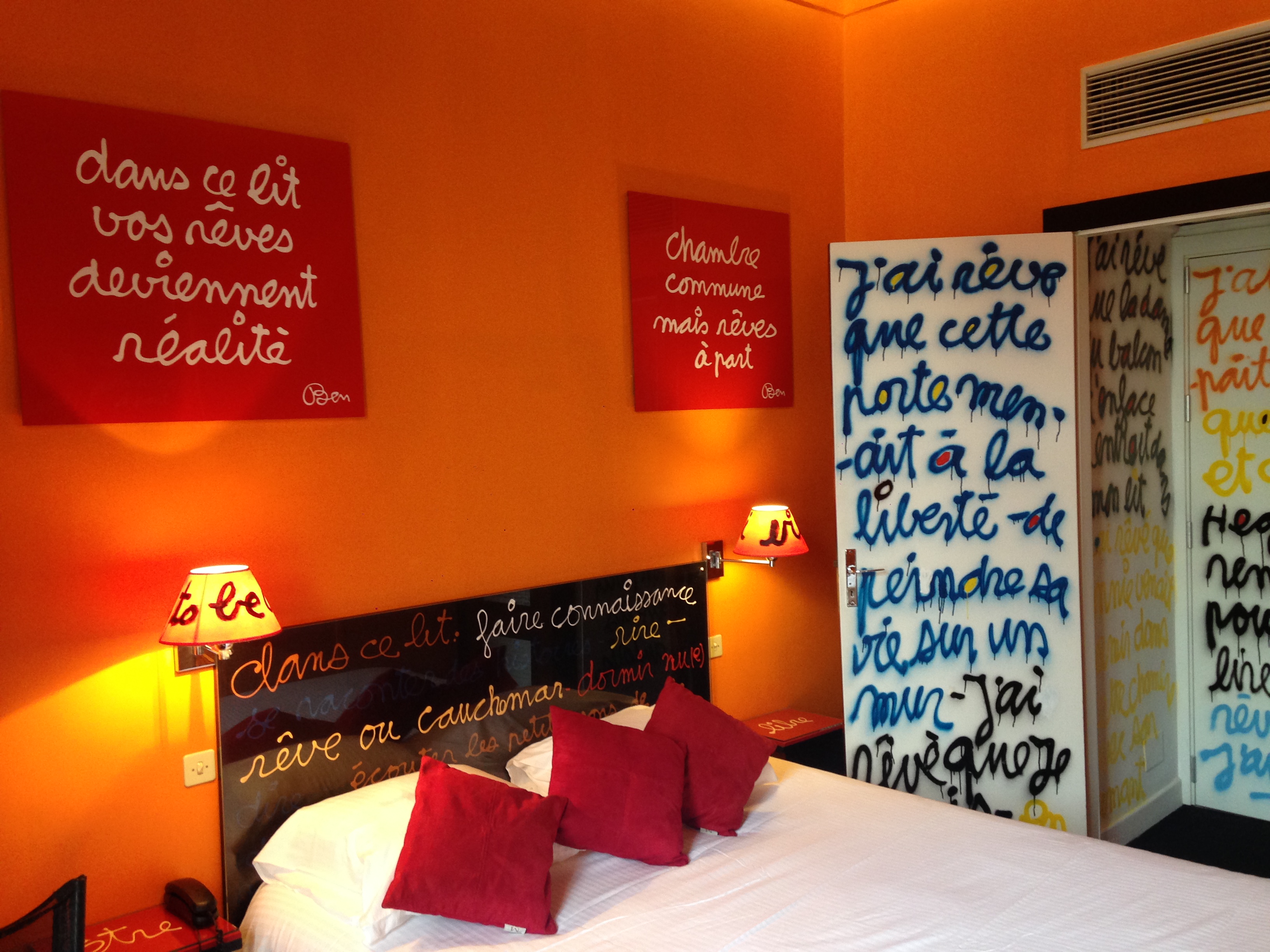
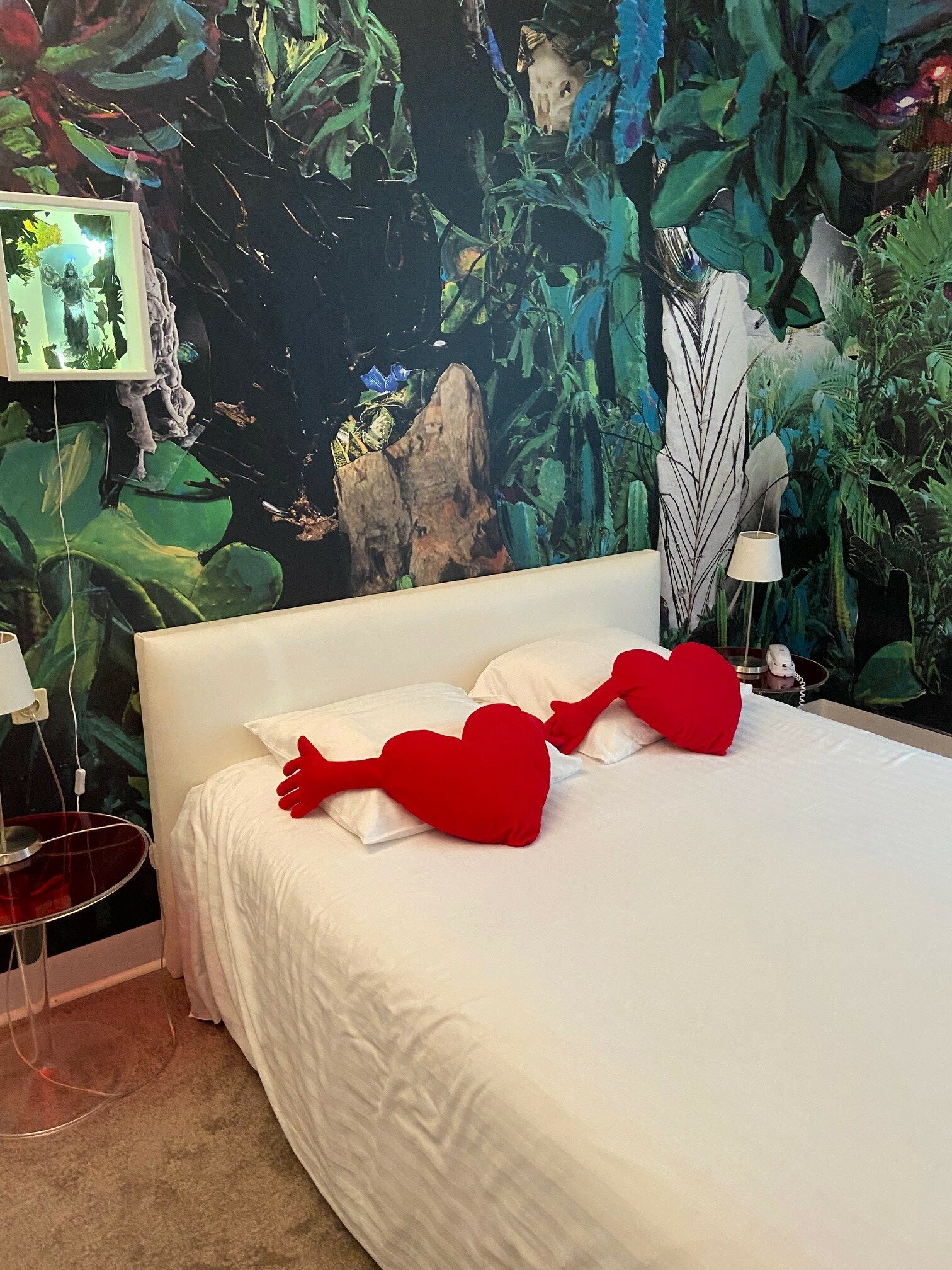
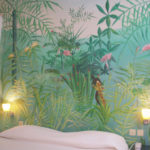



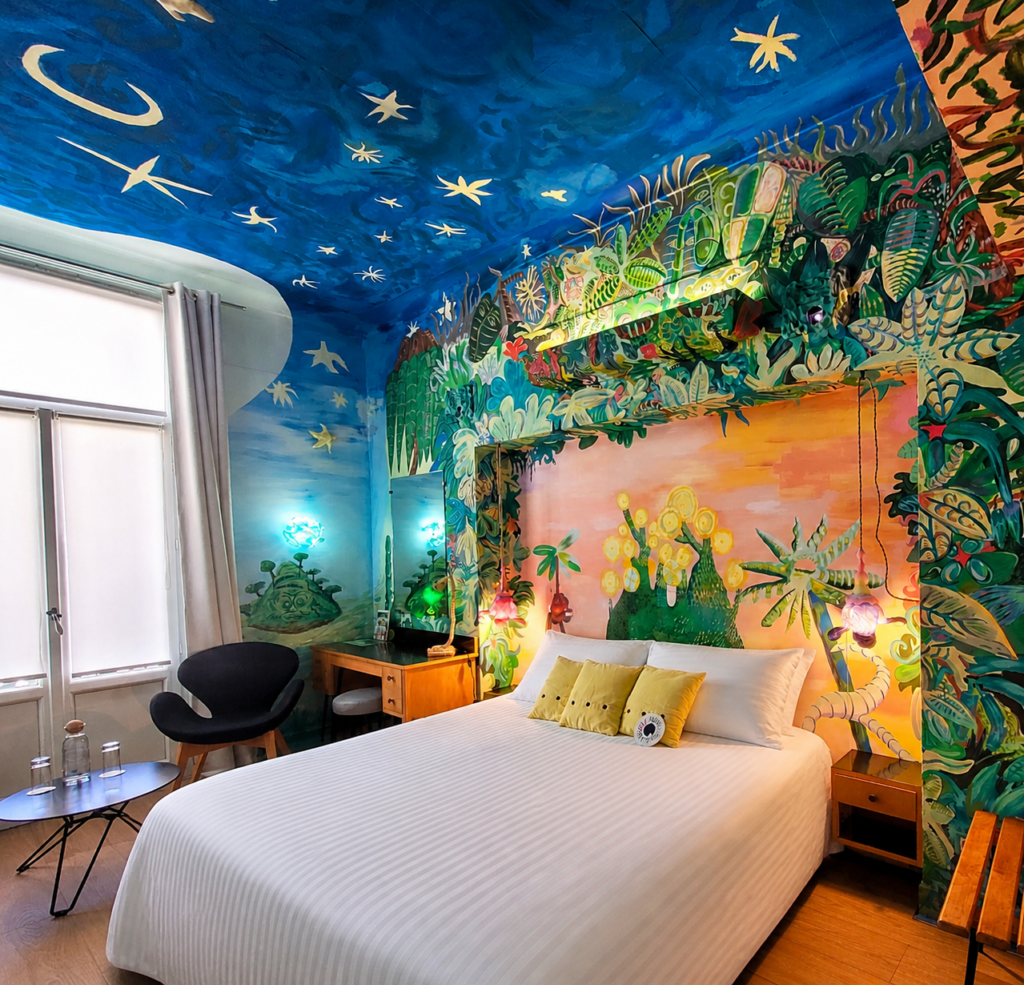
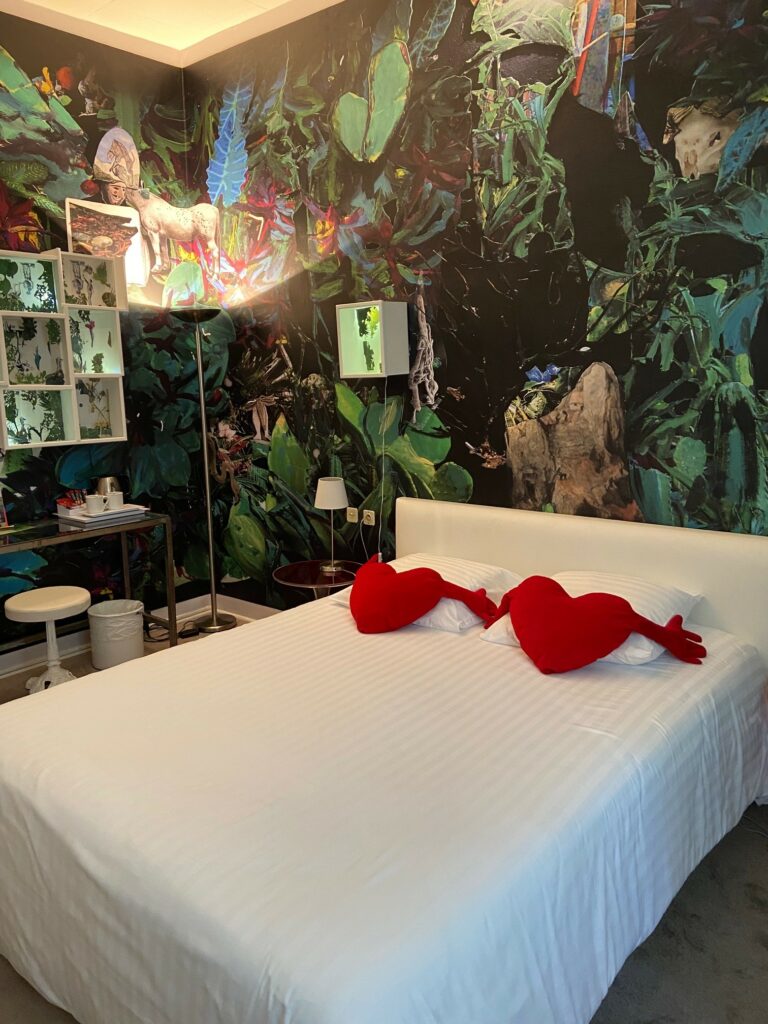
Discover Nuit Branche (Green Night), an immersive work by Jérémy Griffaud that transforms the experience of night into a fantastical journey to the top of the forest canopy. A true refuge nestled within the heart of urban turmoil, this artistic room invites visitors to rise above the city and settle among the treetops of a mysterious forest.
Within this singular ecosystem, the boundaries between realms dissolve, giving way to previously unknown hybrid species: plants with animal-like qualities coexist with creatures bearing vegetal traits, blurring our usual biological references. Immersion is total thanks to a richly layered scenography combining a painted fresco, sculptures, and artistic objects, all enhanced by an animated film that breathes life into this dreamlike setting.
To stay in this space is to embrace a suspended moment—an ascent toward the wild, from which one returns to civilization only upon departure, the mind still inhabited by visions of this reimagined nature.
Look for the green button and discover a surprise after a few seconds.
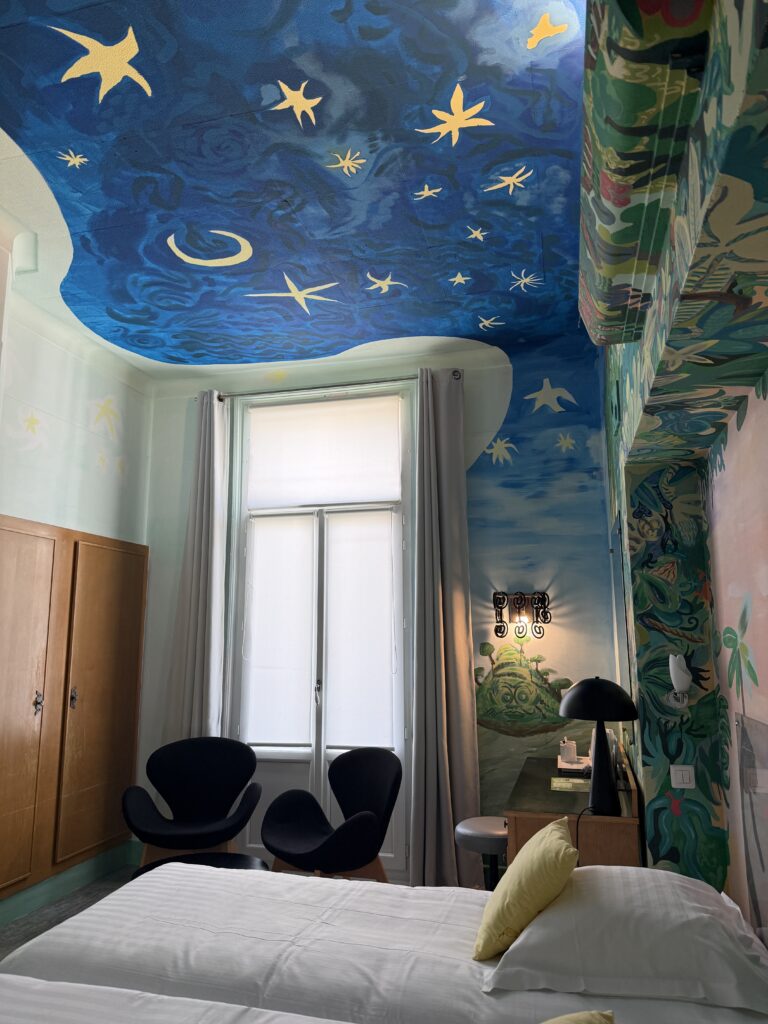
Discover Nuit Branche (Green Night), an immersive work by Jérémy Griffaud that transforms the experience of night into a fantastical journey to the top of the forest canopy. A true refuge nestled within the heart of urban turmoil, this artistic room invites visitors to rise above the city and settle among the treetops of a mysterious forest.
Within this singular ecosystem, the boundaries between realms dissolve, giving way to previously unknown hybrid species: plants with animal-like qualities coexist with creatures bearing vegetal traits, blurring our usual biological references. Immersion is total thanks to a richly layered scenography combining a painted fresco, sculptures, and artistic objects, all enhanced by an animated film that breathes life into this dreamlike setting.
To stay in this space is to embrace a suspended moment—an ascent toward the wild, from which one returns to civilization only upon departure, the mind still inhabited by visions of this reimagined nature.
Look for the green button and discover a surprise after a few seconds.
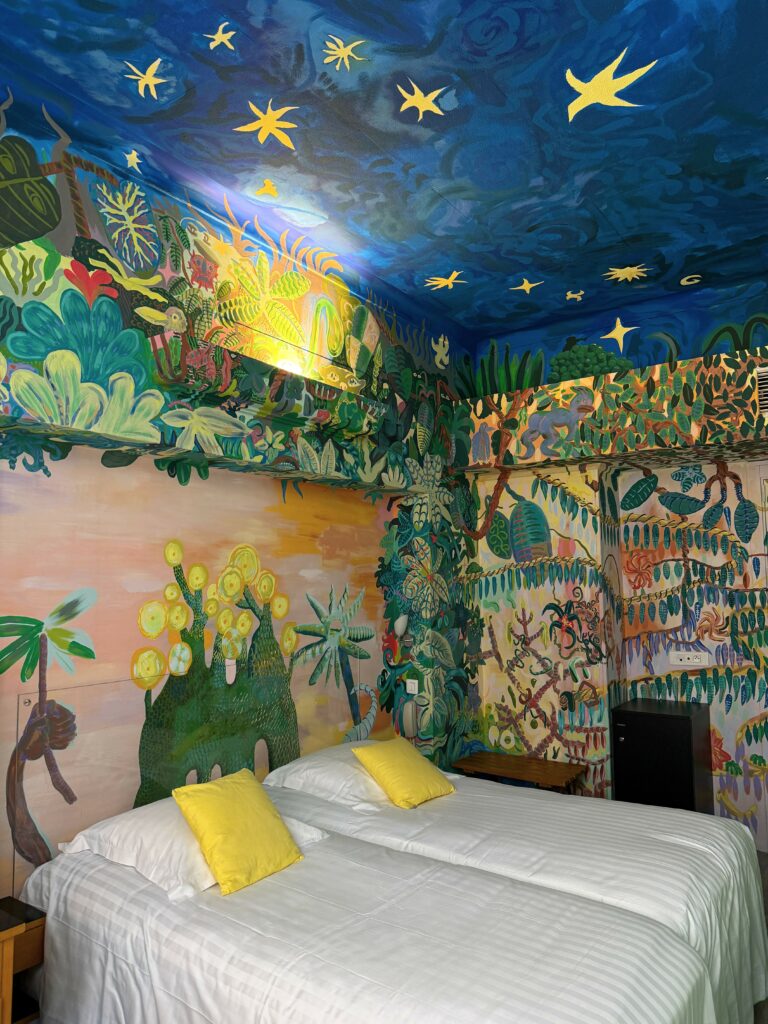
Discover Nuit Branche (Green Night), an immersive work by Jérémy Griffaud that transforms the experience of night into a fantastical journey to the top of the forest canopy. A true refuge nestled within the heart of urban turmoil, this artistic room invites visitors to rise above the city and settle among the treetops of a mysterious forest.
Within this singular ecosystem, the boundaries between realms dissolve, giving way to previously unknown hybrid species: plants with animal-like qualities coexist with creatures bearing vegetal traits, blurring our usual biological references. Immersion is total thanks to a richly layered scenography combining a painted fresco, sculptures, and artistic objects, all enhanced by an animated film that breathes life into this dreamlike setting.
To stay in this space is to embrace a suspended moment—an ascent toward the wild, from which one returns to civilization only upon departure, the mind still inhabited by visions of this reimagined nature.
Look for the green button and discover a surprise after a few seconds.
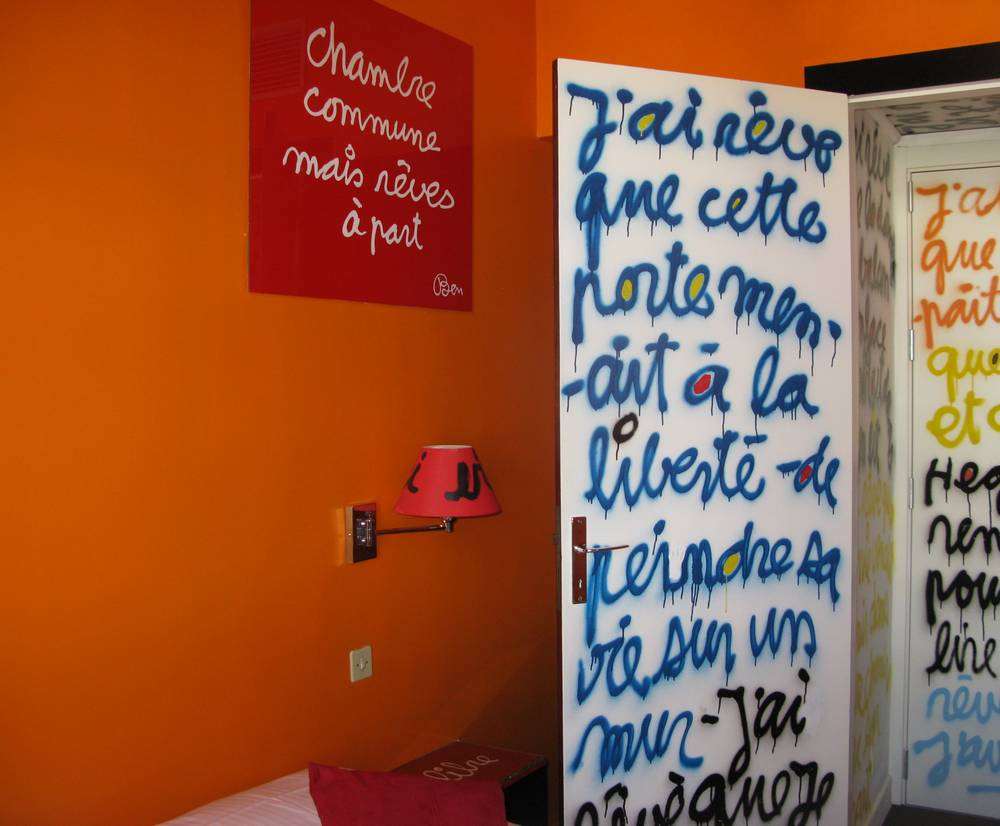
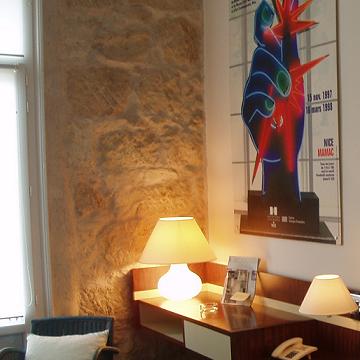
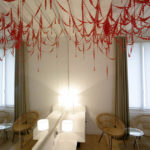
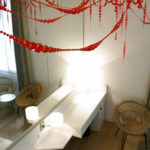
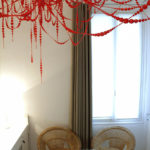
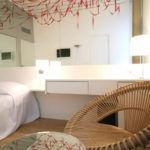
Caroline Rivalan, Ephemeral Room
“Caroline Rivalan explores feminine myths and the hedonistic aspect of nature by appropriating images that she reinterprets through processes of assemblage. The images she creates—whether in microcosms (dioramas) or macrocosms (light installation devices)—irreverently and sarcastically blend different registers. The result is a phantasmagorical universe in which the feminine holds a special place…
For this invitation, the artist playfully conceived part of the space as a diorama, transposing image into volume. The visit becomes an experience. The universe is Dionysian. Nature overflows, poised between seduction and monstrosity. The muses, burlesque dancers from another time, watch over the sleeper.”
Caroline Rivalan, Ephemeral Room
“Caroline Rivalan explores feminine myths and the hedonistic aspect of nature by appropriating images that she reinterprets through processes of assemblage. The images she creates—whether in microcosms (dioramas) or macrocosms (light installation devices)—irreverently and sarcastically blend different registers. The result is a phantasmagorical universe in which the feminine holds a special place…
For this invitation, the artist playfully conceived part of the space as a diorama, transposing image into volume. The visit becomes an experience. The universe is Dionysian. Nature overflows, poised between seduction and monstrosity. The muses, burlesque dancers from another time, watch over the sleeper.”
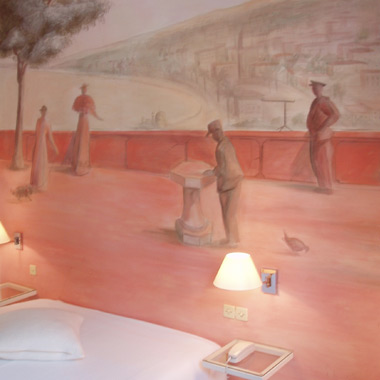
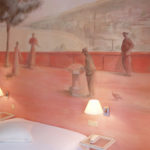
Nights in the colors of escape, for you, stationary travelers of the Windsor Hotel.
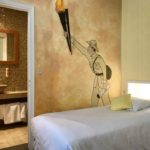
Antoine BAUDOIN had not visited all the countries that nourished his murals, but at the tip of his brushes, his generous virtuosity was the very essence of his painting. Thus, like in an oriental tale, a picture book where characters merge with landscapes near and far, these airy murals draw you in, into a world whose scents and music you sense, filling your senses and dreams.
Egypt, India, Japan, a garden by Douanier Rousseau, the Promenade des Anglais… Or even Spain of Don Quixote, sketched with pencil…
And the blur flows into the texture of the wall. Which eventually ceases to exist.
Solid transparency, inner strength, under the relevance of the brush.
He was barely twenty, Antoine, the impish spirit who would soon depart for other stars, leaving us the grace of his inner worlds.
Have a beautiful journey, Sir, Madam!
Paulette BAUDOIN (sister of the artist), August 2020
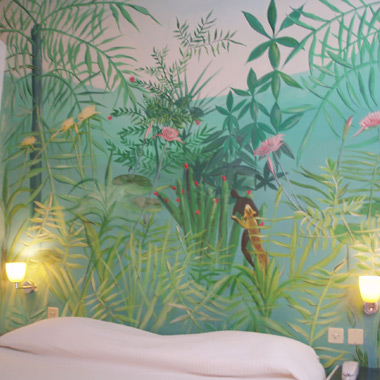
Rooms with murals from 1975 to 1985 created by Antoine Baudoin (1953 –l 1987)
Nights in the colors of escape, for you, stationary travelers of the Windsor Hotel.
Antoine BAUDOIN had not visited all the countries that nourished his murals, but at the tip of his brushes, his generous virtuosity was the very essence of his painting. Thus, like in an oriental tale, a picture book where characters merge with landscapes near and far, these airy murals draw you in, into a world whose scents and music you sense, filling your senses and dreams.
Egypt, India, Japan, a garden by Douanier Rousseau, the Promenade des Anglais… Or even Spain of Don Quixote, sketched with pencil…
And the blur flows into the texture of the wall. Which eventually ceases to exist.
Solid transparency, inner strength, under the relevance of the brush.
He was barely twenty, Antoine, the impish spirit who would soon depart for other stars, leaving us the grace of his inner worlds.
Have a beautiful journey, Sir, Madam!
Paulette BAUDOIN (sister of the artist), August 2020
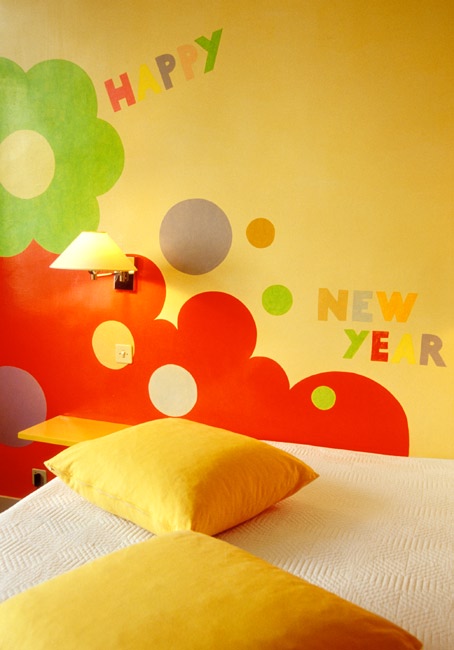
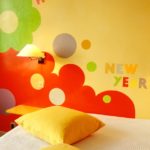
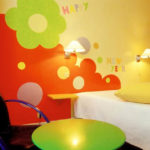
NO MAN’S TIME
I am a specialist in beauty. I have set myself a program:
to seek happiness and friendship in my works. In this way, I stand against irony and cynicism. I do not know what interest I have in love. The same as everyone else, I imagine. I evoke pleasant things, friendship and love. I do not know what my motivation is. It might well be frustration.
I began using flowers when I was searching for a symbol of friendship, and I have not found anything better so far. Yet I am not a child of the sixties nor close to nature. I know nothing about flowers, but I like decoration—decorative patterns, symmetry, wallpaper, and children’s room decoration.
Beauty appears there with great force. It is so seductive. I have always tried to be friendly, and I look for friendship in others. I would like to give form to these things, to make them visible. And what comes out of it is something shocking. My wall paintings resemble monsters, but that is also very exciting. My passion for these subjects and the reactions they might provoke push me to make these works. I have tried to make a bad painting and placed it next to a better one to see whether one can tell the difference between good and bad. It is especially difficult because I take no pleasure in making bad works.
Lily van der Stokker.
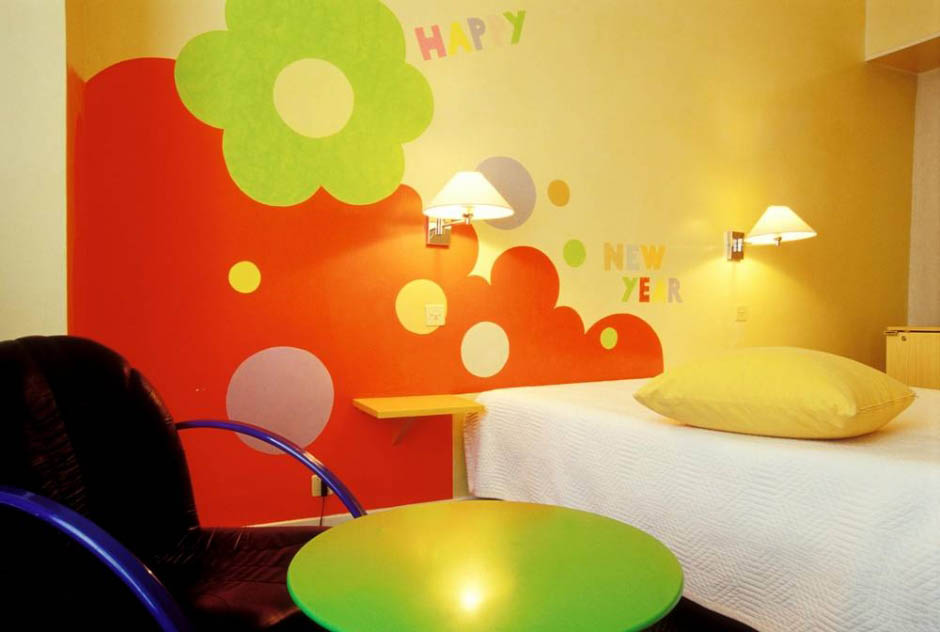
NO MAN’S TIME
I am a specialist in beauty. I have set myself a program:
to seek happiness and friendship in my works. In this way, I stand against irony and cynicism. I do not know what interest I have in love. The same as everyone else, I imagine. I evoke pleasant things, friendship and love. I do not know what my motivation is. It might well be frustration.
I began using flowers when I was searching for a symbol of friendship, and I have not found anything better so far. Yet I am not a child of the sixties nor close to nature. I know nothing about flowers, but I like decoration—decorative patterns, symmetry, wallpaper, and children’s room decoration.
Beauty appears there with great force. It is so seductive. I have always tried to be friendly, and I look for friendship in others. I would like to give form to these things, to make them visible. And what comes out of it is something shocking. My wall paintings resemble monsters, but that is also very exciting. My passion for these subjects and the reactions they might provoke push me to make these works. I have tried to make a bad painting and placed it next to a better one to see whether one can tell the difference between good and bad. It is especially difficult because I take no pleasure in making bad works.
Lily van der Stokker.
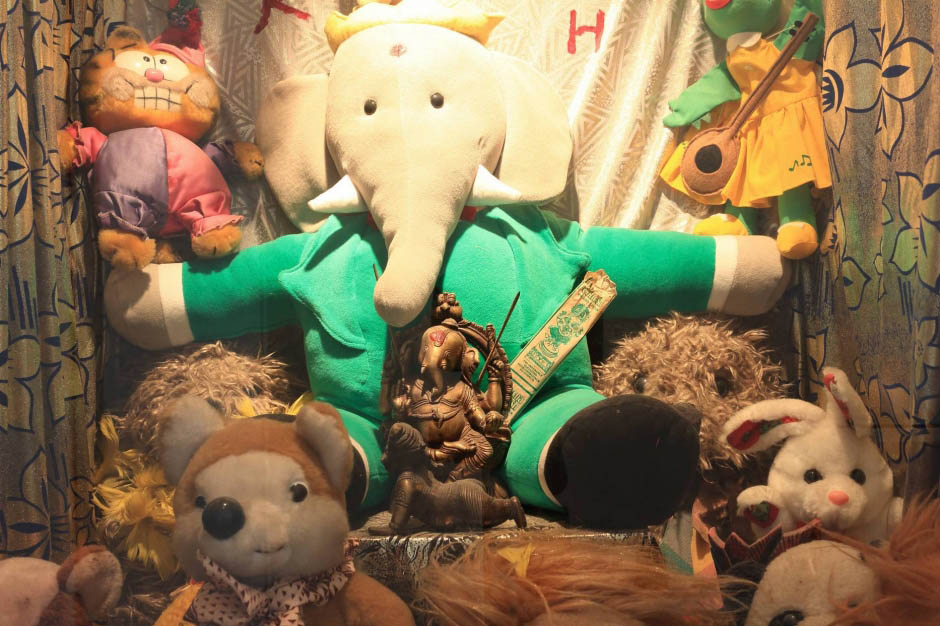
An Altar Room
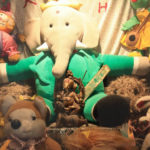
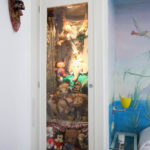
Inspired by two elephants—Babar, created by Jean de Brunhoff, and Ganesha, the Indian deity—I have built an altar in their honor using stuffed animal toys collected during my travels around the world.
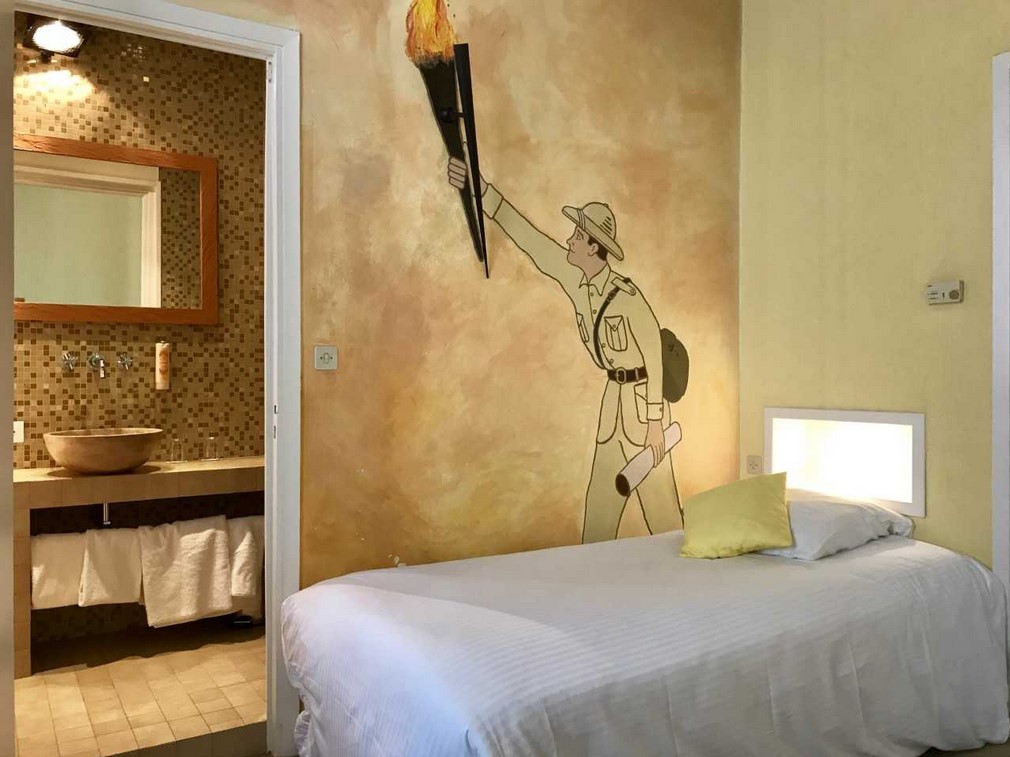
The room I chose already contained a mural painted by Antoine Baudoin, the first artist to create works specifically for the Hotel Windsor. He died at a very young age. His works can be seen throughout the hotel, particularly in the corridors, where they explore Indian themes.
I have tried to incorporate these elements in order to create an “altar room” within your hotel room, No. 352.
NAMASTE
Palestine Charlemagne.
Nice
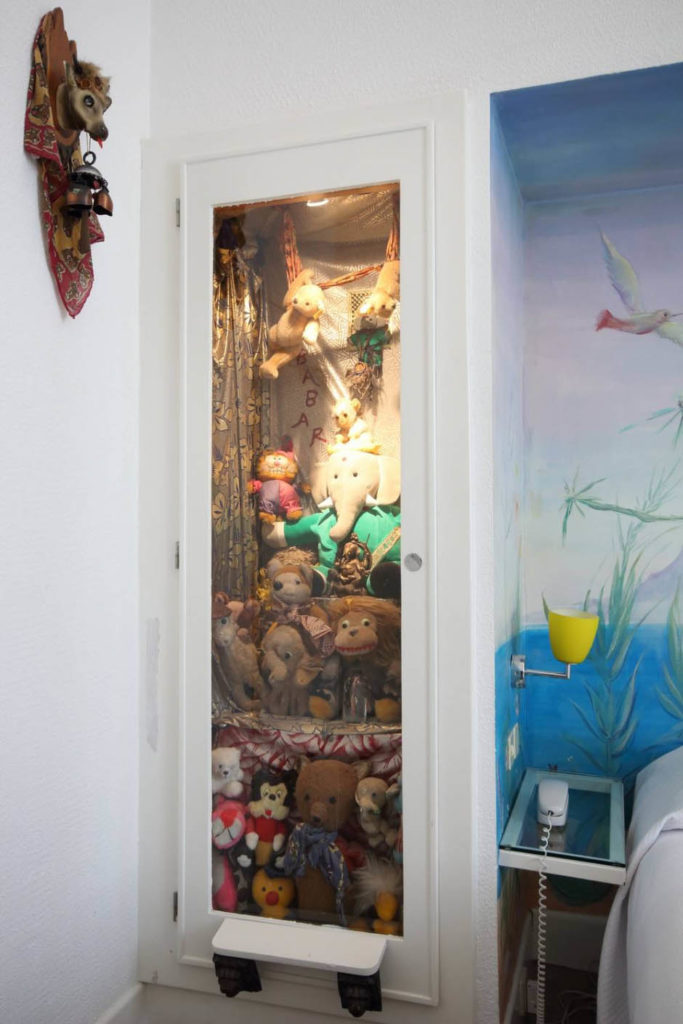
An Altar Room
Inspired by two elephants—Babar, created by Jean de Brunhoff, and Ganesha, the Indian deity—I have built an altar in their honor using stuffed animal toys collected during my travels around the world.
The room I chose already contained a mural painted by Antoine Baudoin, the first artist to create works specifically for the Hotel Windsor. He died at a very young age. His works can be seen throughout the hotel, particularly in the corridors, where they explore Indian themes.
I have tried to incorporate these elements in order to create an “altar room” within your hotel room, No. 352.
NAMASTE
Palestine Charlemagne.
Nice
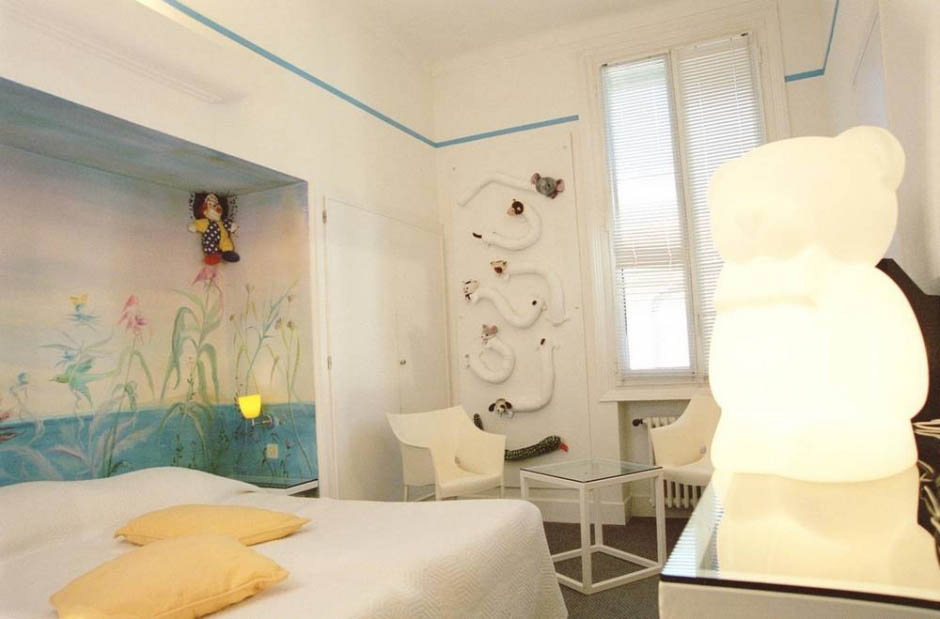
An Altar Room
Inspired by two elephants—Babar, created by Jean de Brunhoff, and Ganesha, the Indian deity—I have built an altar in their honor using stuffed animal toys collected during my travels around the world.
The room I chose already contained a mural painted by Antoine Baudoin, the first artist to create works specifically for the Hotel Windsor. He died at a very young age. His works can be seen throughout the hotel, particularly in the corridors, where they explore Indian themes.
I have tried to incorporate these elements in order to create an “altar room” within your hotel room, No. 352.
NAMASTE
Palestine Charlemagne.
Nice
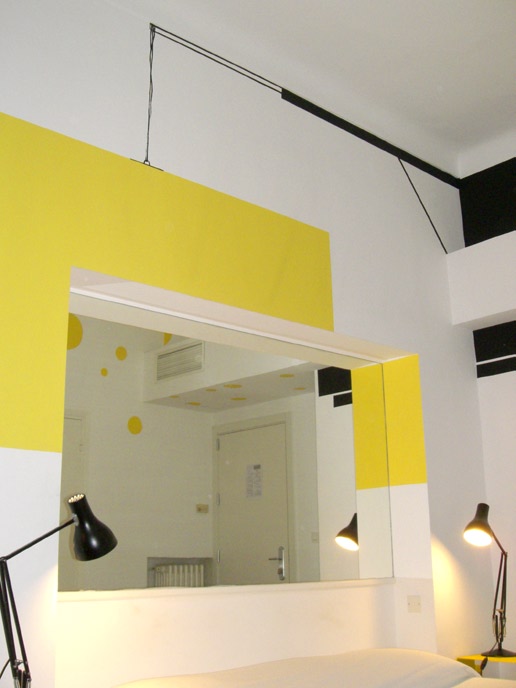
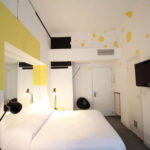
Unobstructed View – Mirrors and Mimosas
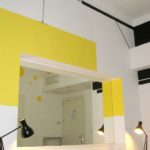
Reflections suspended from the black edges of a phantom structure.
A mirror doubled with yellow. Unobstructed views of this architecture that slips away into infinity, only to endlessly reconstruct itself through the chance movements of slowness that rest implies. All planes slide and combine, revealing the softness of the walls, between a sky of mimosas and painted (feigned) strings that hold up appearances.
The delicacy of the oscillating panels collides with the sharper angles of a necessarily silent hotel room.
Olivier Nottellet. July 2008.
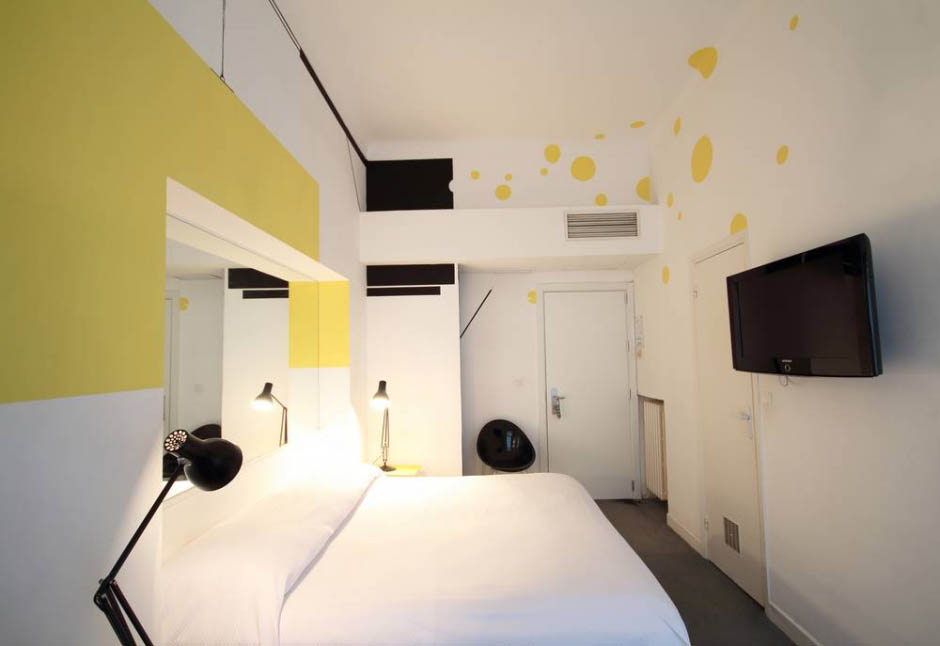
Unobstructed View – Mirrors and Mimosas
Reflections suspended from the black edges of a phantom structure.
A mirror doubled with yellow. Unobstructed views of this architecture that slips away into infinity, only to endlessly reconstruct itself through the chance movements of slowness that rest implies. All planes slide and combine, revealing the softness of the walls, between a sky of mimosas and painted (feigned) strings that hold up appearances.
The delicacy of the oscillating panels collides with the sharper angles of a necessarily silent hotel room.
Olivier Nottellet. July 2008.
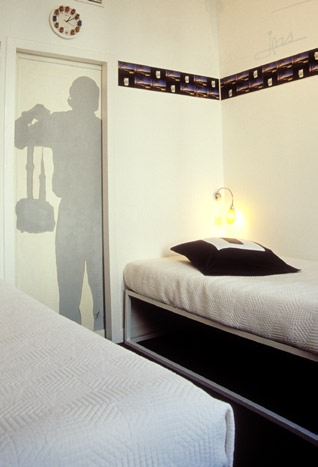
Born in 1946 in Nice, where he lives and works, Jean Mas became firmly established within the artistic movement of Nice from 1973 onward. He gained recognition through the creation of a distinctive object: the Fly Cage (Cage à Mouche).
Over the course of twenty years, Mas’s artistic production branched out and can be organized around three principal areas:
A visual artistic practice, including the Fly Cages, Soap Bubbles, The Few (Les Peu), and Shadows (Les Ombres), the latter being, together with the Fly Cages, the key works of his artistic approach.
A performative practice, consisting of performances (Parformas) and action-lectures that develop across artistic, scientific, and psychoanalytic fields.
A literary practice, encompassing a wide range of writings: novels, correspondence, exhibition catalogues and art books, as well as a television screenplay.
The seminal object, the Fly Cage, the central vehicle of Mas’s artistic expression, is perceived as an individual mythology within the framework of an Art of Attitude. Through the various facets of his work, the artist appears, in a certain way, to embody and synthesize the spirit of the École de Nice.
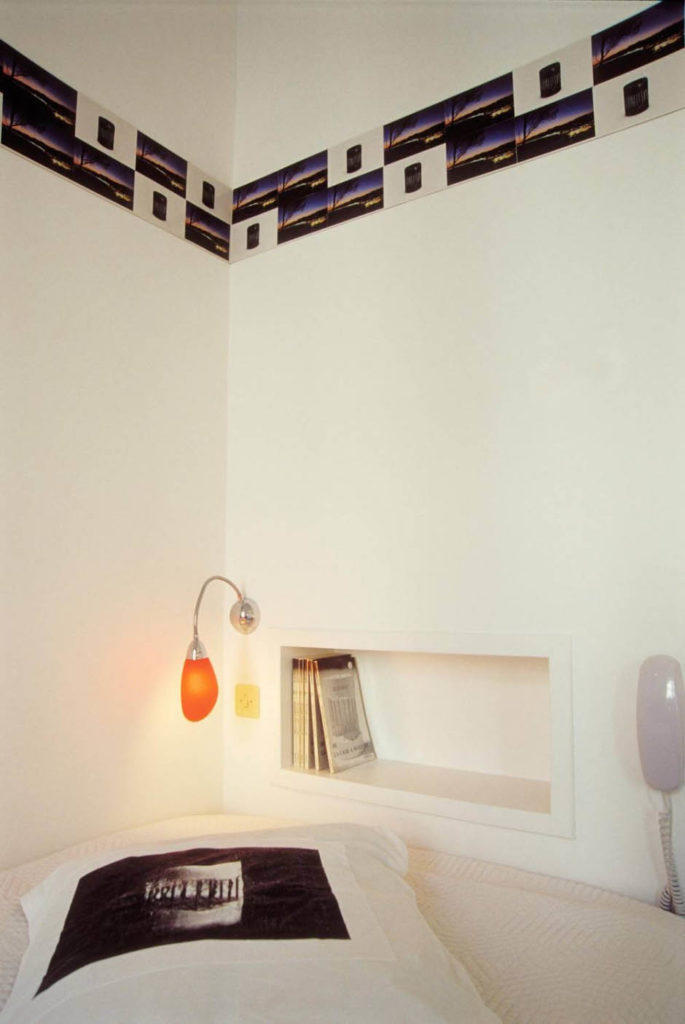
Born in 1946 in Nice, where he lives and works, Jean Mas became firmly established within the artistic movement of Nice from 1973 onward. He gained recognition through the creation of a distinctive object: the Fly Cage (Cage à Mouche).
Over the course of twenty years, Mas’s artistic production branched out and can be organized around three principal areas:
A visual artistic practice, including the Fly Cages, Soap Bubbles, The Few (Les Peu), and Shadows (Les Ombres), the latter being, together with the Fly Cages, the key works of his artistic approach.
A performative practice, consisting of performances (Parformas) and action-lectures that develop across artistic, scientific, and psychoanalytic fields.
A literary practice, encompassing a wide range of writings: novels, correspondence, exhibition catalogues and art books, as well as a television screenplay.
The seminal object, the Fly Cage, the central vehicle of Mas’s artistic expression, is perceived as an individual mythology within the framework of an Art of Attitude. Through the various facets of his work, the artist appears, in a certain way, to embody and synthesize the spirit of the École de Nice.

The Griffin
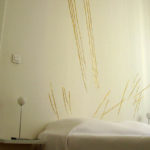
The griffin, guardian of the treasure, has brought a bit of work along with him on vacation. But even on holiday, the griffin keeps scribbling and scratching—it is in his nature, or rather, in his natures, for the griffin combines multiple attributes.
With the hindquarters of a lion and the forequarters of an eagle (complete with horse-like ears), he may be described as hieracocéphalic by those who know what that means.
In his small hotel room, he circles furiously, his wings half-spread and his claws lashing the walls, leaving behind the golden marks of his temporary confinement. What a fool—he has made a complete mess of the place just after it had been redecorated!
Unfortunately, like so many who are entrusted with the preservation of capital, he has failed to consider the consequences of his excesses.
Very clever indeed…
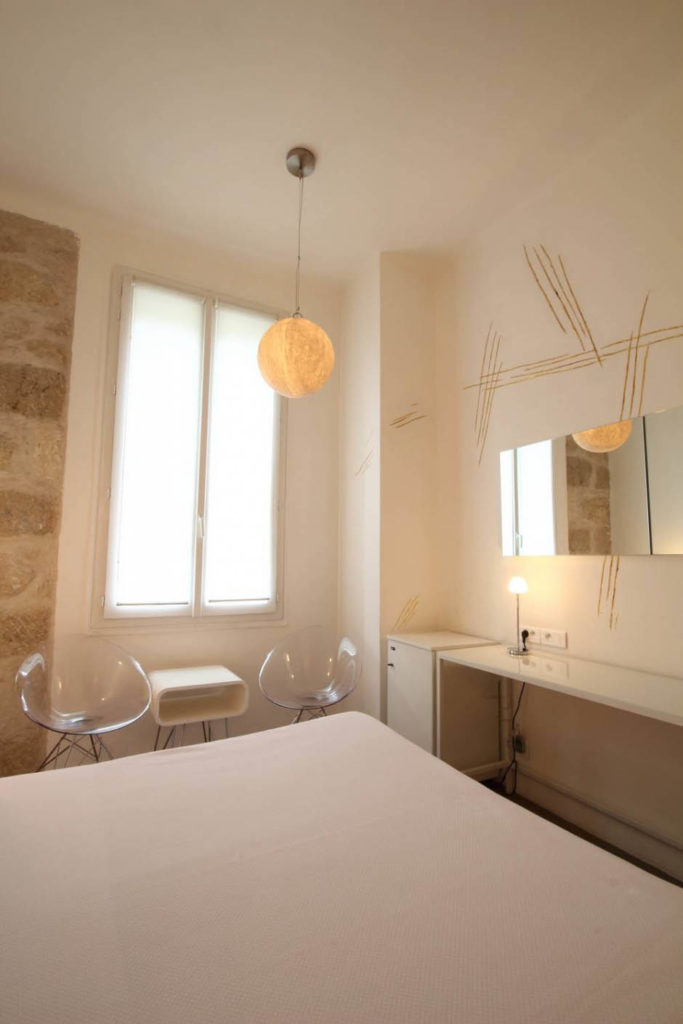
The Griffin
The griffin, guardian of the treasure, has brought a bit of work along with him on vacation. But even on holiday, the griffin keeps scribbling and scratching—it is in his nature, or rather, in his natures, for the griffin combines multiple attributes.
With the hindquarters of a lion and the forequarters of an eagle (complete with horse-like ears), he may be described as hieracocéphalic by those who know what that means.
In his small hotel room, he circles furiously, his wings half-spread and his claws lashing the walls, leaving behind the golden marks of his temporary confinement. What a fool—he has made a complete mess of the place just after it had been redecorated!
Unfortunately, like so many who are entrusted with the preservation of capital, he has failed to consider the consequences of his excesses.
Very clever indeed…
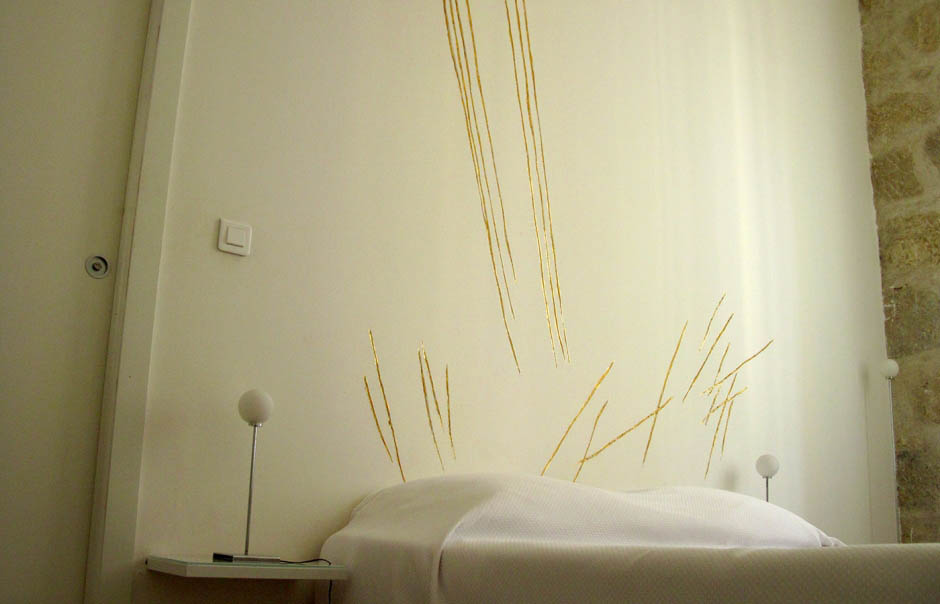
The Griffin
The griffin, guardian of the treasure, has brought a bit of work along with him on vacation. But even on holiday, the griffin keeps scribbling and scratching—it is in his nature, or rather, in his natures, for the griffin combines multiple attributes.
With the hindquarters of a lion and the forequarters of an eagle (complete with horse-like ears), he may be described as hieracocéphalic by those who know what that means.
In his small hotel room, he circles furiously, his wings half-spread and his claws lashing the walls, leaving behind the golden marks of his temporary confinement. What a fool—he has made a complete mess of the place just after it had been redecorated!
Unfortunately, like so many who are entrusted with the preservation of capital, he has failed to consider the consequences of his excesses.
Very clever indeed…
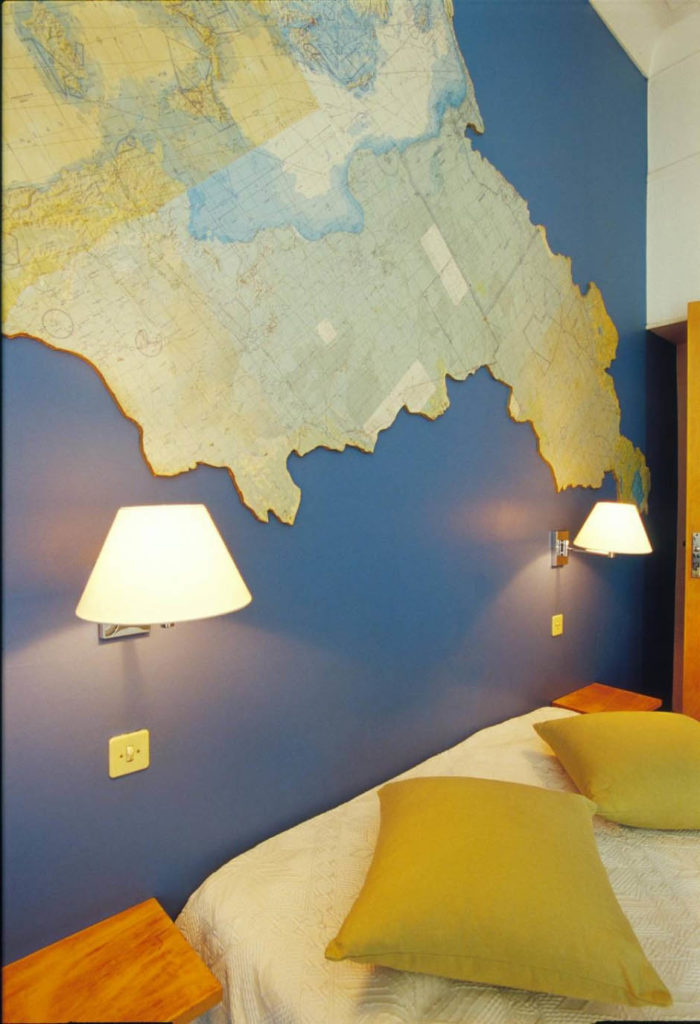
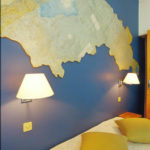
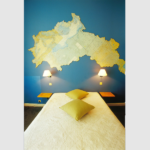
Now you stay in part of the mediterranean sea concave all the terrain you see goes in ward to one sea whether west as part or totally soon we can get all our feel in the sea so seen via sun fertile reserve.
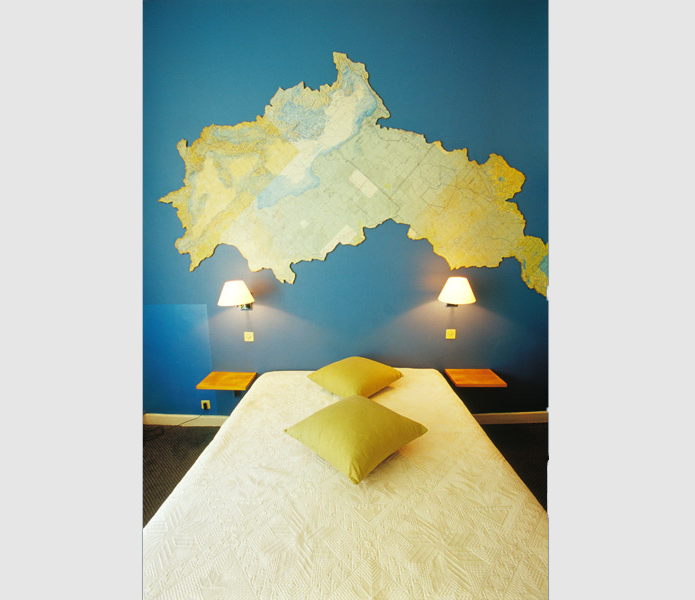
Now you stay in part of the mediterranean sea concave all the terrain you see goes in ward to one sea whether west as part or totally soon we can get all our feel in the sea so seen via sun fertile reserve.
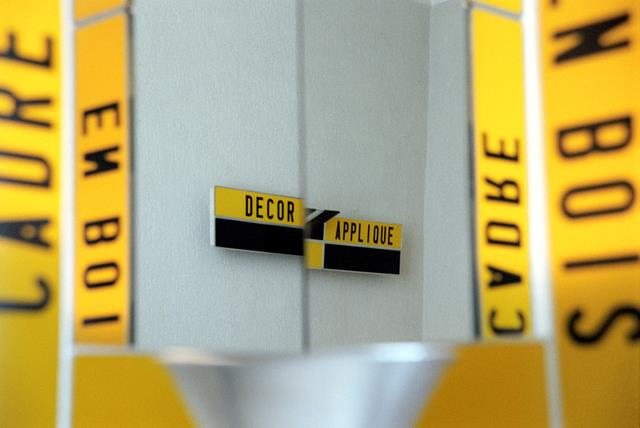
In 1980, he met Serge Gainsbourg and engaged with him in a verbal playfulness. “Et cætera c’est adéquat” (“And so on is adequate”). In a department store—the same one where Marcel Duchamp bought his bottle rack—he decided to inscribe this phrase on license plates, in order to commemorate the event. From 1981 onward, he adopted the license plate as a medium: it is quick to produce, and the artist has nothing to do except place the order by telephone directly with the manufacturer. He produced several works in a spirit close to Pop artists.
The plates each designate a part of a larger object, which, when assembled end to end, recomposes the shape of that object. In 1985, he exhibited in New York for the first time, at the Emily Harvey Gallery, which primarily supports artists of the Fluxus movement. The following year in Paris, he presented his work at Galerie Polaris. Joël Ducorroy returned to New York in 1987 for a new solo exhibition and on that occasion met Andy Warhol. He became acquainted with artists from Nice and took part in several group shows. A major exhibition was dedicated to him at the Galerie d’Art Contemporain of the Nice Museums.
The Tokyo Museum of Modern Art invited him in 1989 to participate in the exhibition Color or Monochrome. Joël Ducorroy regularly took part in evenings of sound poetry at the Revue Parlée of the Centre Pompidou, presented by Blaise Gauthier. He adopted the designation of “plate artist” (artiste plaquetien), a term suggested to him by Jean-Claude Lande, a friend of Raymond Hains. He met Marcel Mariën, the Belgian Surrealist artist, and each stay in Brussels became an opportunity for him to visit him. In 1991, nine galleries came together to celebrate ten years of his work. At the end of 1992, the Confort Moderne in Poitiers gave him the opportunity to realize a major work: he composed the interior of an F4-type apartment entirely out of license plates. More than a thousand plates were required to produce this work.
A reader of Gide, Bukowski, and Burroughs, Joël Ducorroy, as a collector of words, plays with art. He is described as a neo-conceptual humorist. He has found a “trick”—the trick is style—for which one only needs to know how to read in order to understand. Like one of his masters, Rodchenko, he applies his ideas across different fields such as architecture, textile design, and photography.
Joël Ducorroy
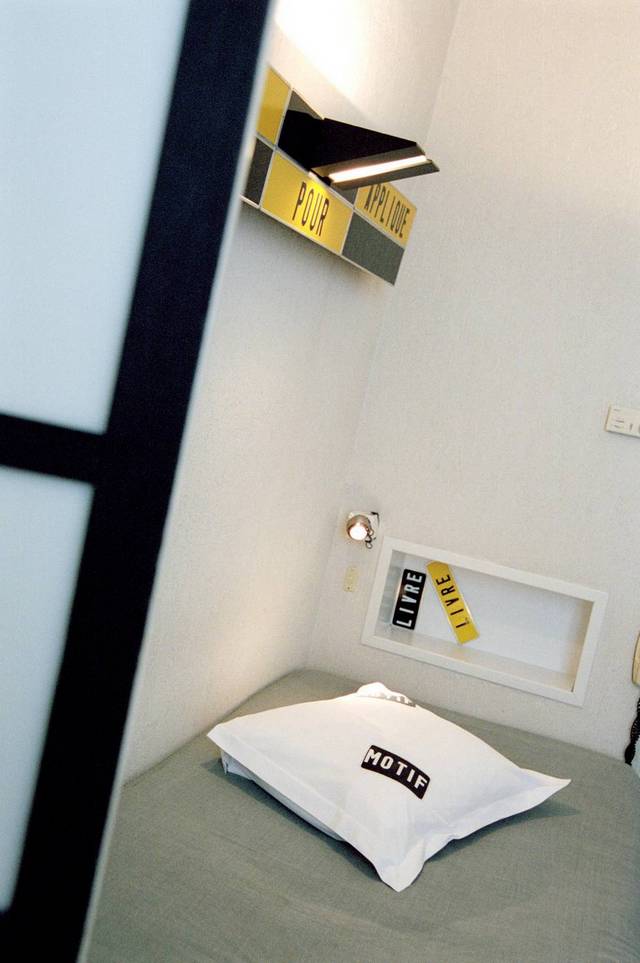
In 1980, he met Serge Gainsbourg and engaged with him in a verbal playfulness. “Et cætera c’est adéquat” (“And so on is adequate”). In a department store—the same one where Marcel Duchamp bought his bottle rack—he decided to inscribe this phrase on license plates, in order to commemorate the event. From 1981 onward, he adopted the license plate as a medium: it is quick to produce, and the artist has nothing to do except place the order by telephone directly with the manufacturer. He produced several works in a spirit close to Pop artists.
The plates each designate a part of a larger object, which, when assembled end to end, recomposes the shape of that object. In 1985, he exhibited in New York for the first time, at the Emily Harvey Gallery, which primarily supports artists of the Fluxus movement. The following year in Paris, he presented his work at Galerie Polaris. Joël Ducorroy returned to New York in 1987 for a new solo exhibition and on that occasion met Andy Warhol. He became acquainted with artists from Nice and took part in several group shows. A major exhibition was dedicated to him at the Galerie d’Art Contemporain of the Nice Museums.
The Tokyo Museum of Modern Art invited him in 1989 to participate in the exhibition Color or Monochrome. Joël Ducorroy regularly took part in evenings of sound poetry at the Revue Parlée of the Centre Pompidou, presented by Blaise Gauthier. He adopted the designation of “plate artist” (artiste plaquetien), a term suggested to him by Jean-Claude Lande, a friend of Raymond Hains. He met Marcel Mariën, the Belgian Surrealist artist, and each stay in Brussels became an opportunity for him to visit him. In 1991, nine galleries came together to celebrate ten years of his work. At the end of 1992, the Confort Moderne in Poitiers gave him the opportunity to realize a major work: he composed the interior of an F4-type apartment entirely out of license plates. More than a thousand plates were required to produce this work.
A reader of Gide, Bukowski, and Burroughs, Joël Ducorroy, as a collector of words, plays with art. He is described as a neo-conceptual humorist. He has found a “trick”—the trick is style—for which one only needs to know how to read in order to understand. Like one of his masters, Rodchenko, he applies his ideas across different fields such as architecture, textile design, and photography.
Joël Ducorroy
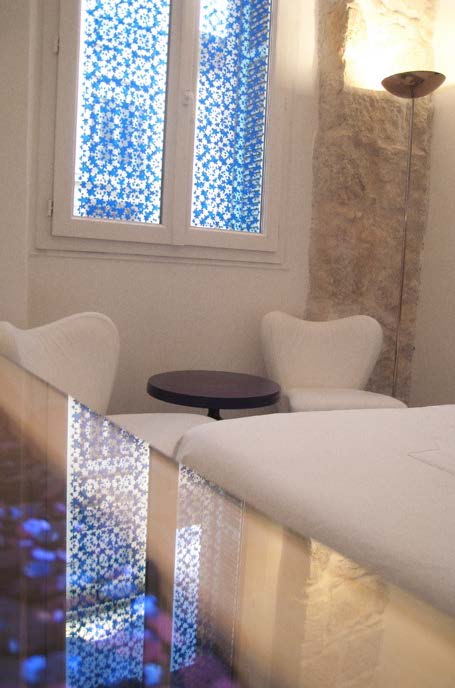
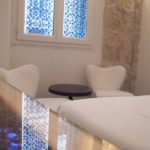
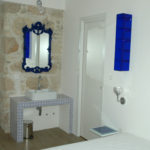
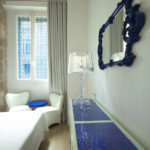
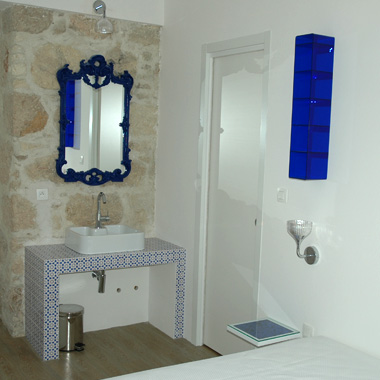
I create installations whose matrix is this famous blue rosette pattern. I associate it with the moucharabieh motif, recurrent in my artistic practice—a kind of perforated screen found in the architecture of many Mediterranean countries. This partition divides exterior and interior, public space and private space; it also protects from light and heat by creating a suitable, beneficial shade. I play with this condition, which allows one to observe the outside without being truly seen, thus evoking a welcome sense of intimacy.
Thus, the Arab-Andalusian rosette becomes a symbol of travel, dialogue, exchange, and encounters; it forms a link between East and West.
These rosette points scattered across the world form a constellation of intertwined civilizations: Africa—Egypt, Asia—China, the Middle East—Europe, South America—North America…
Samta Benyahia
Dec. 2008
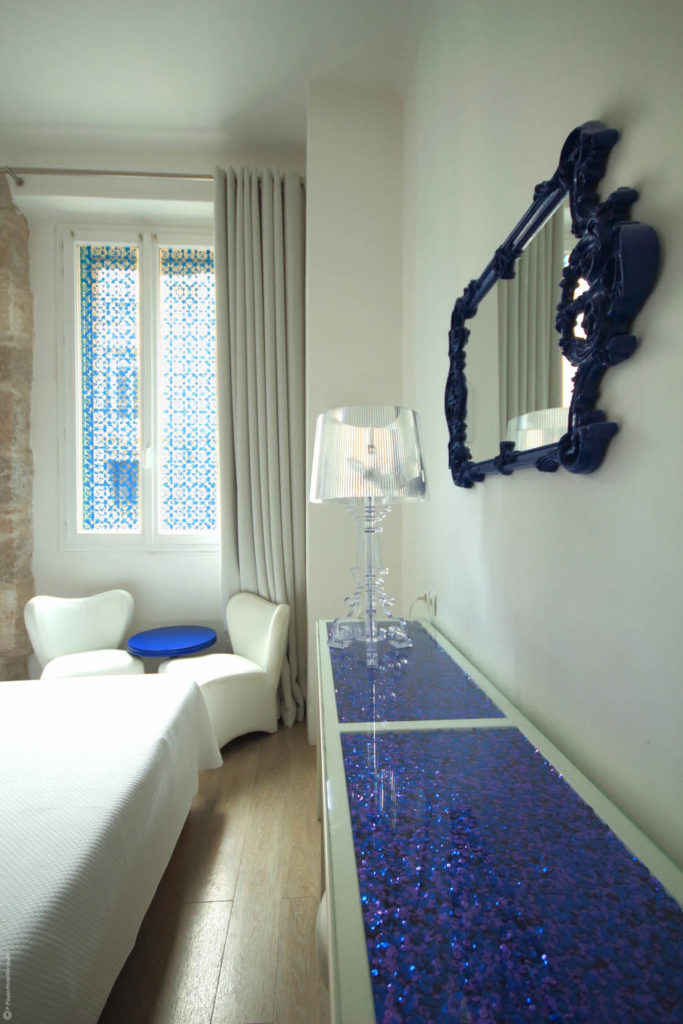
I create installations whose matrix is this famous blue rosette pattern. I associate it with the moucharabieh motif, recurrent in my artistic practice—a kind of perforated screen found in the architecture of many Mediterranean countries. This partition divides exterior and interior, public space and private space; it also protects from light and heat by creating a suitable, beneficial shade. I play with this condition, which allows one to observe the outside without being truly seen, thus evoking a welcome sense of intimacy.
Thus, the Arab-Andalusian rosette becomes a symbol of travel, dialogue, exchange, and encounters; it forms a link between East and West.
These rosette points scattered across the world form a constellation of intertwined civilizations: Africa—Egypt, Asia—China, the Middle East—Europe, South America—North America…
Samta Benyahia
Dec. 2008
I create installations whose matrix is this famous blue rosette pattern. I associate it with the moucharabieh motif, recurrent in my artistic practice—a kind of perforated screen found in the architecture of many Mediterranean countries. This partition divides exterior and interior, public space and private space; it also protects from light and heat by creating a suitable, beneficial shade. I play with this condition, which allows one to observe the outside without being truly seen, thus evoking a welcome sense of intimacy.
Thus, the Arab-Andalusian rosette becomes a symbol of travel, dialogue, exchange, and encounters; it forms a link between East and West.
These rosette points scattered across the world form a constellation of intertwined civilizations: Africa—Egypt, Asia—China, the Middle East—Europe, South America—North America…
Samta Benyahia
Dec. 2008
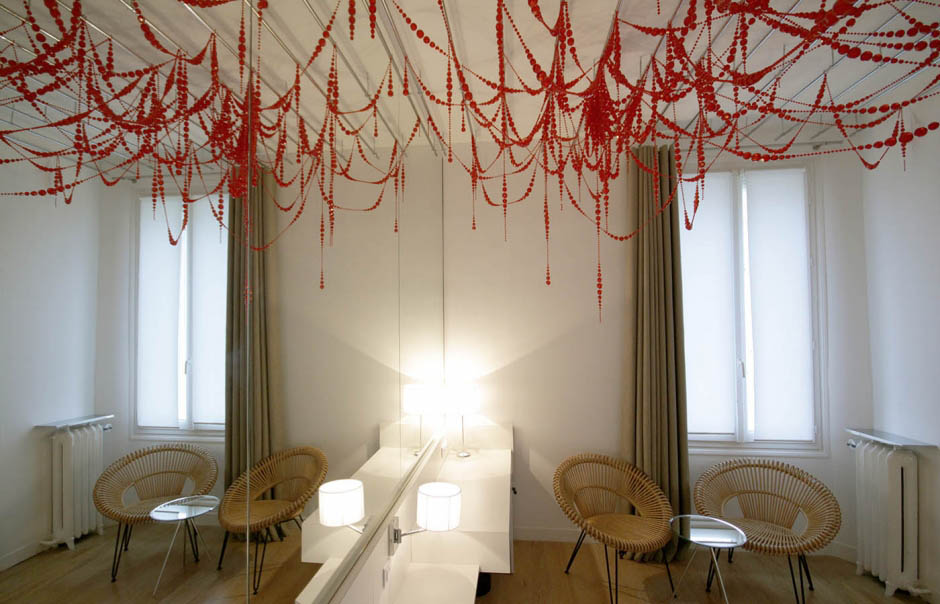
Baxter dynamites meaning. He magnifies the next-to-nothing. He ritualizes triviality. He turns the slightest quirk into a sort of cerimony. The petty trials and tribulations of day-to-day life prompt him to mini-sagas of the insurmountable. But if we take a second look at his work, the nub of the problem lies not to much in any confrontation with reality but in the anguish of communication…
“…I would say.”
The whole universe is art.
I find the universe again in frivolous things, things of no practical use whatsoever.
Could that not be what art is?
Vanity of vanities, vanity of vanities… art is vanity.
Art, and all these frivolities: they are wind, they are vanity.
Art is an illusory illumination, I would say.
Meaninglessness is one as well.
To think that art is insignificant and futile is another.
L’art est le poil d’une tortue et la corne d’un lapin, dirais-je.
Janvier 2013
Jeong-Hwa Choi
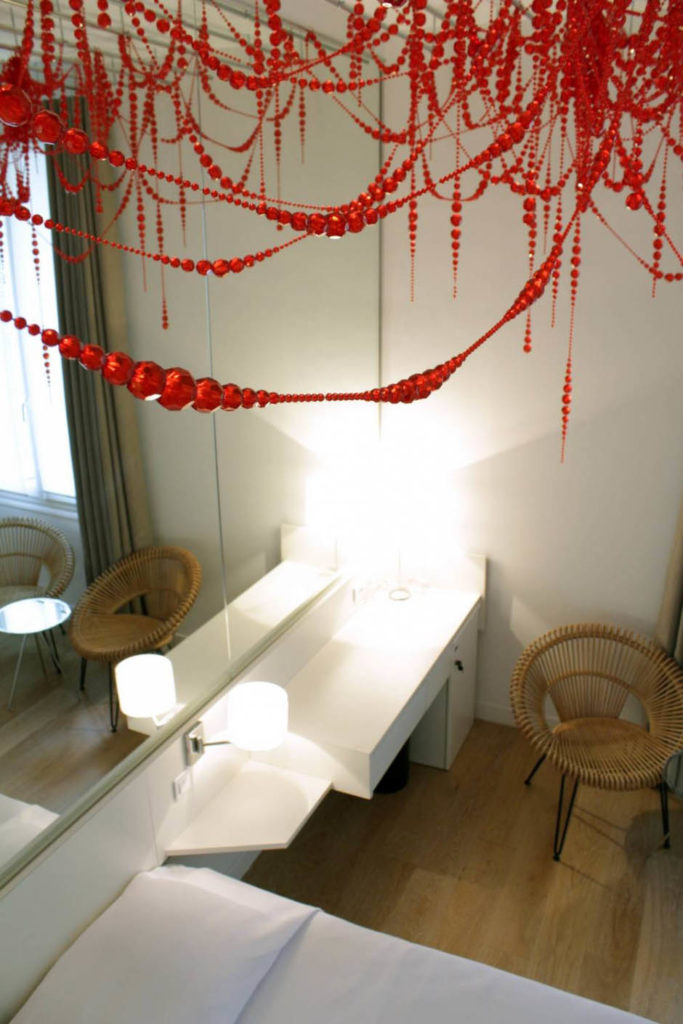
“…I would say.”
The whole universe is art.
I find the universe again in frivolous things, things of no practical use whatsoever.
Could that not be what art is?
Vanity of vanities, vanity of vanities… art is vanity.
Art, and all these frivolities: they are wind, they are vanity.
Art is an illusory illumination, I would say.
Meaninglessness is one as well.
To think that art is insignificant and futile is another.
L’art est le poil d’une tortue et la corne d’un lapin, dirais-je.
Janvier 2013
Jeong-Hwa Choi
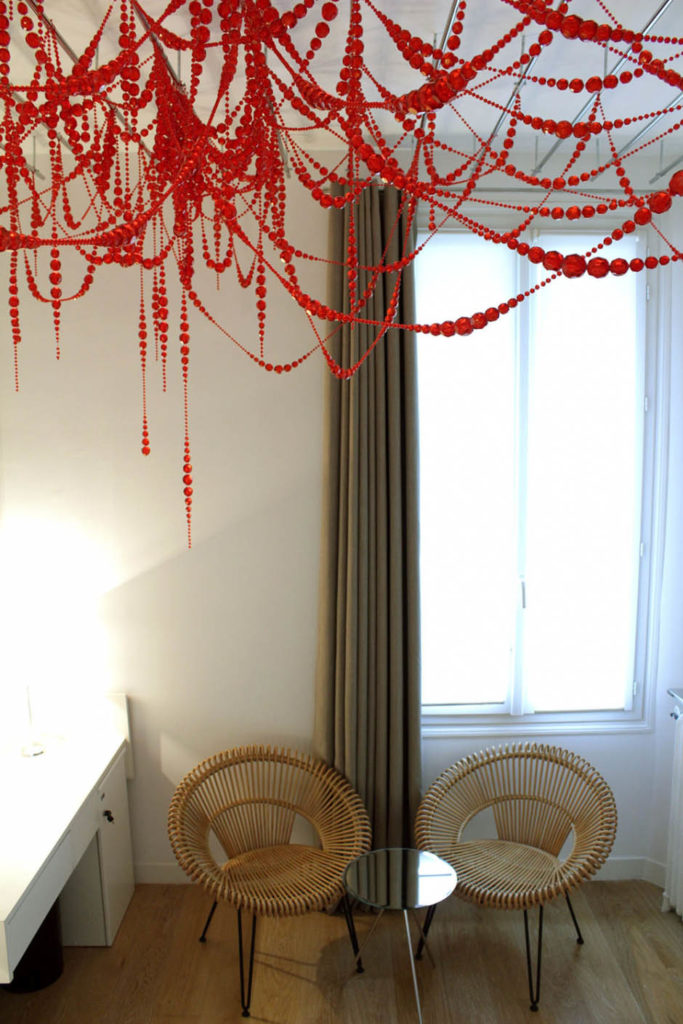
“…I would say.”
The whole universe is art.
I find the universe again in frivolous things, things of no practical use whatsoever.
Could that not be what art is?
Vanity of vanities, vanity of vanities… art is vanity.
Art, and all these frivolities: they are wind, they are vanity.
Art is an illusory illumination, I would say.
Meaninglessness is one as well.
To think that art is insignificant and futile is another.
L’art est le poil d’une tortue et la corne d’un lapin, dirais-je.
Janvier 2013
Jeong-Hwa Choi
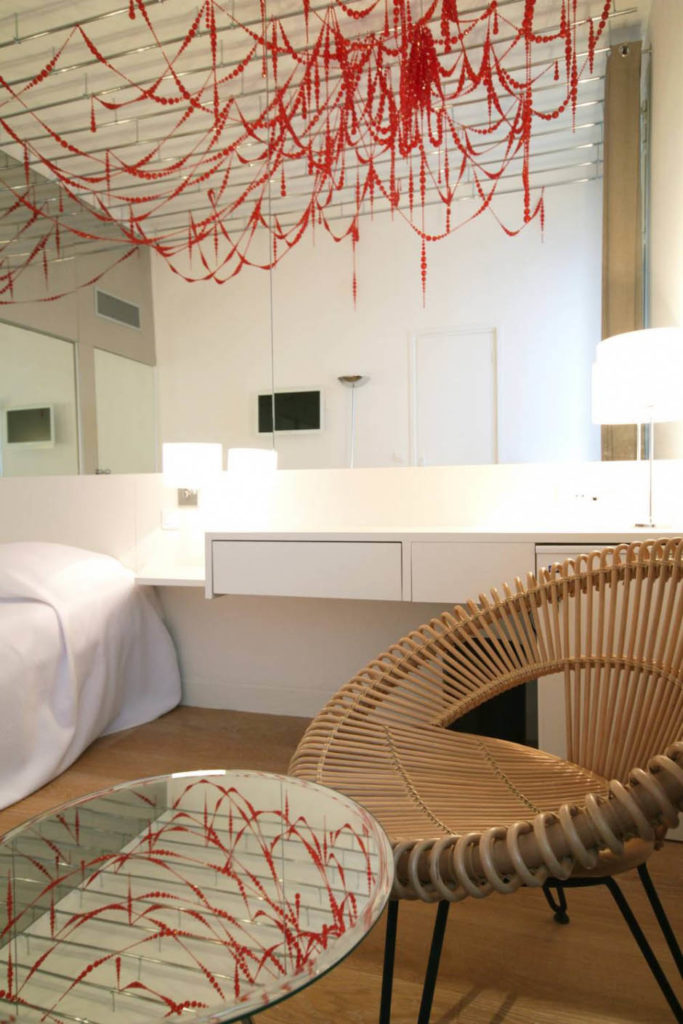
“…I would say.”
The whole universe is art.
I find the universe again in frivolous things, things of no practical use whatsoever.
Could that not be what art is?
Vanity of vanities, vanity of vanities… art is vanity.
Art, and all these frivolities: they are wind, they are vanity.
Art is an illusory illumination, I would say.
Meaninglessness is one as well.
To think that art is insignificant and futile is another.
L’art est le poil d’une tortue et la corne d’un lapin, dirais-je.
Janvier 2013
Jeong-Hwa Choi


Rates
Services
 Mini Frigo
 Sèche-cheveux
 Climatisation
 Coffre-fort
 Free Wifi
 Téléphone
 TV Satellite
Seasons
Low Season02/01/2026 au 31/03/2026 et 01/11/2026 au 30/12/2026
Mid-season01/04/2026 - 30/04/2026 et 01/10/2026 - 31/10/2026
High-season01/05/2026 - 30/09/2026 et 31/12/2026 - 03/01/2027
Except Monaco Grand Prix04/06/2026 - 07/06/2026
Extras
Taxe de séjour3.48 € P.P
Petit déjeuner buffet19 € P.P
Petit-déjeuner continental servi en salle13 € P.P
Demi-Pension53 € P.P
Lit supplémentaire30 € / nuit
Lit bébé12 € / nuit
Chien (interdit au restaurant et dans le jardin)12 € / nuit