Art Exhibitions
Art Exhibitions
Jérémy Griffaud
The Prayer
2026
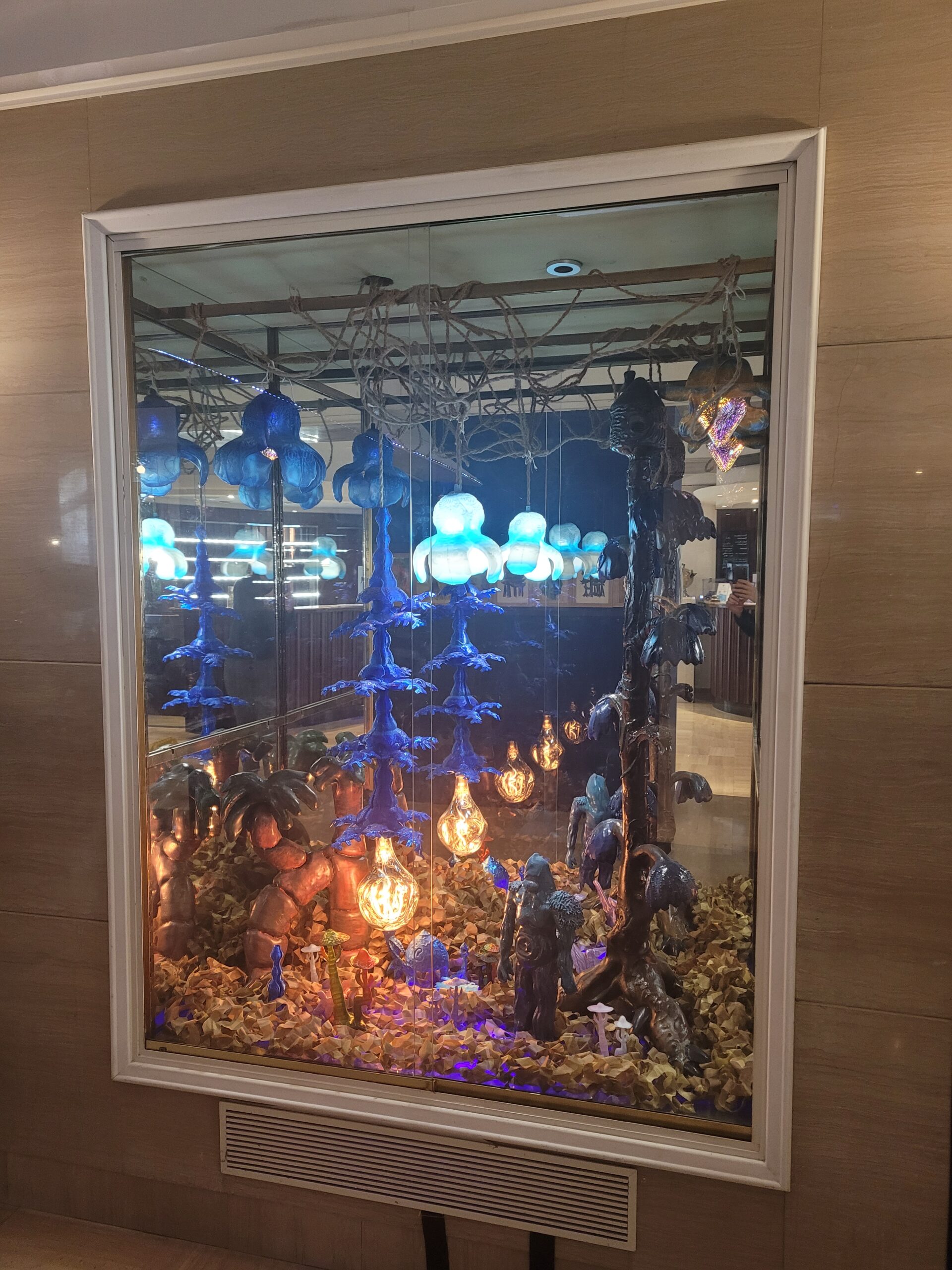
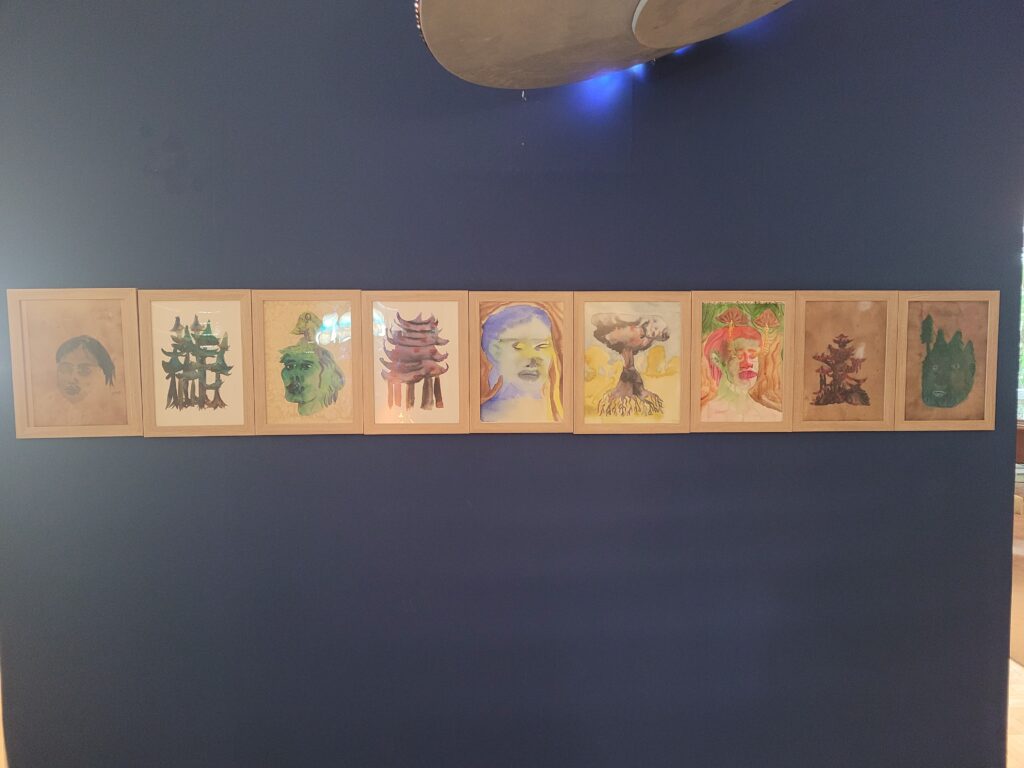
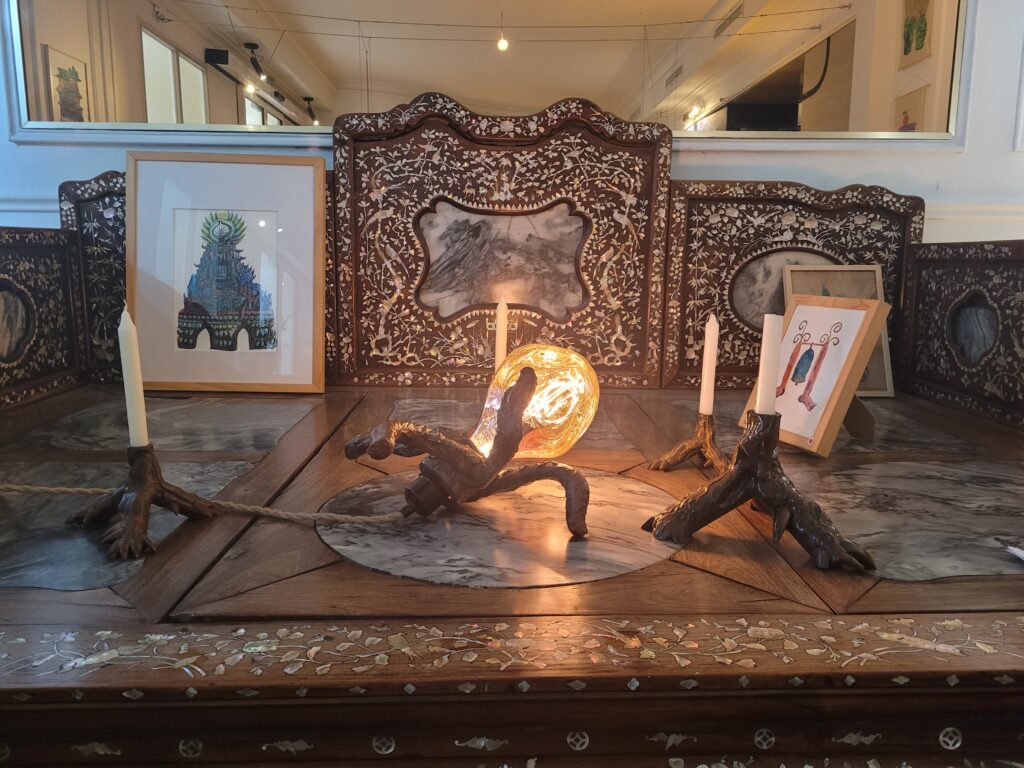
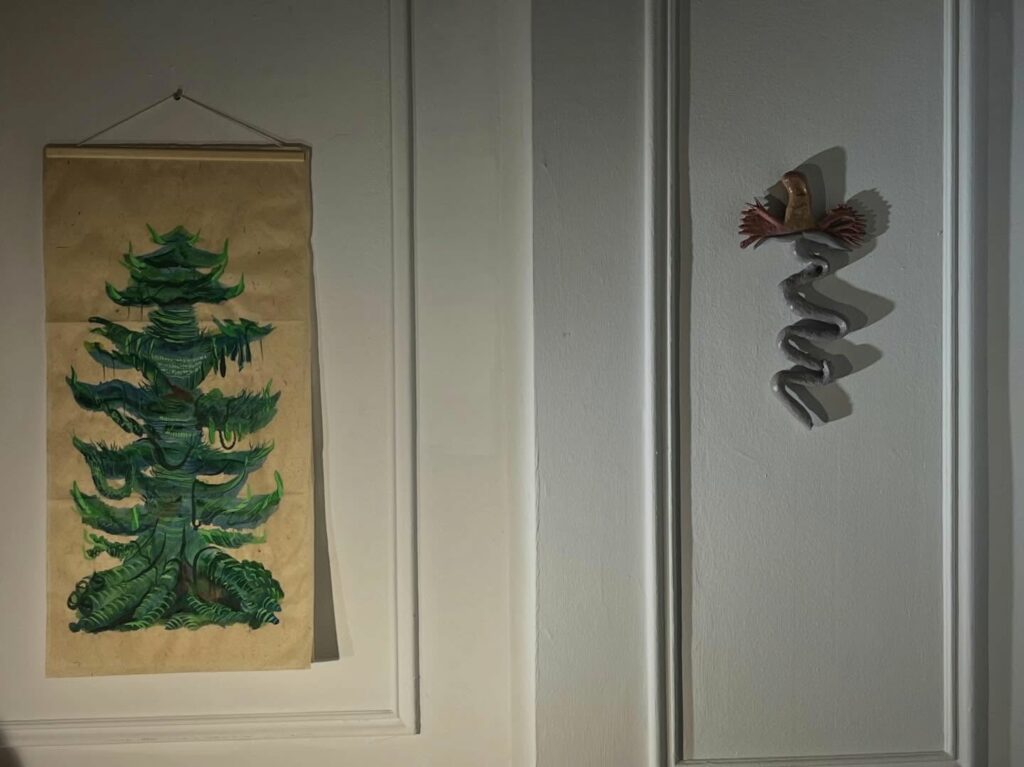
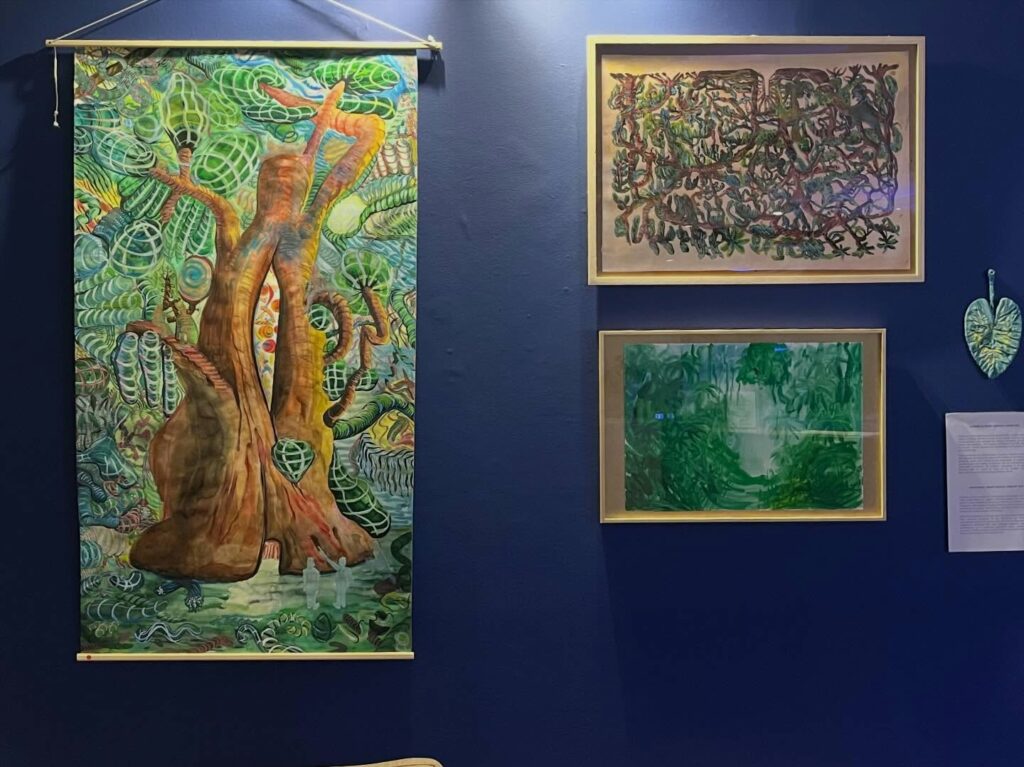
Initiated during a residency in Shanghai in late 2025, the series La Prière (The Prayer) by Jérémy Griffaud reveals the worship of a distant world, inspired by the ornamentation of temples in Suzhou, Hangzhou, and Jiaxing. Through paintings with saturated colors and a profusion of organic, flowing lines, the artist unfolds a cosmology where the sacred merges with biology.
Within this temple from another time, humans are no longer central; they become devotees of the mycelium, an invisible and omnipresent entity that guides spirits. Far from a degraded nature, vegetation expresses itself with sovereign freedom, shaping the architecture of a horizontal spirituality. Using watercolor and gouache, Griffaud stages a ritual in which ancestral vestiges meet the untamed power of the living world.
Peter Fend
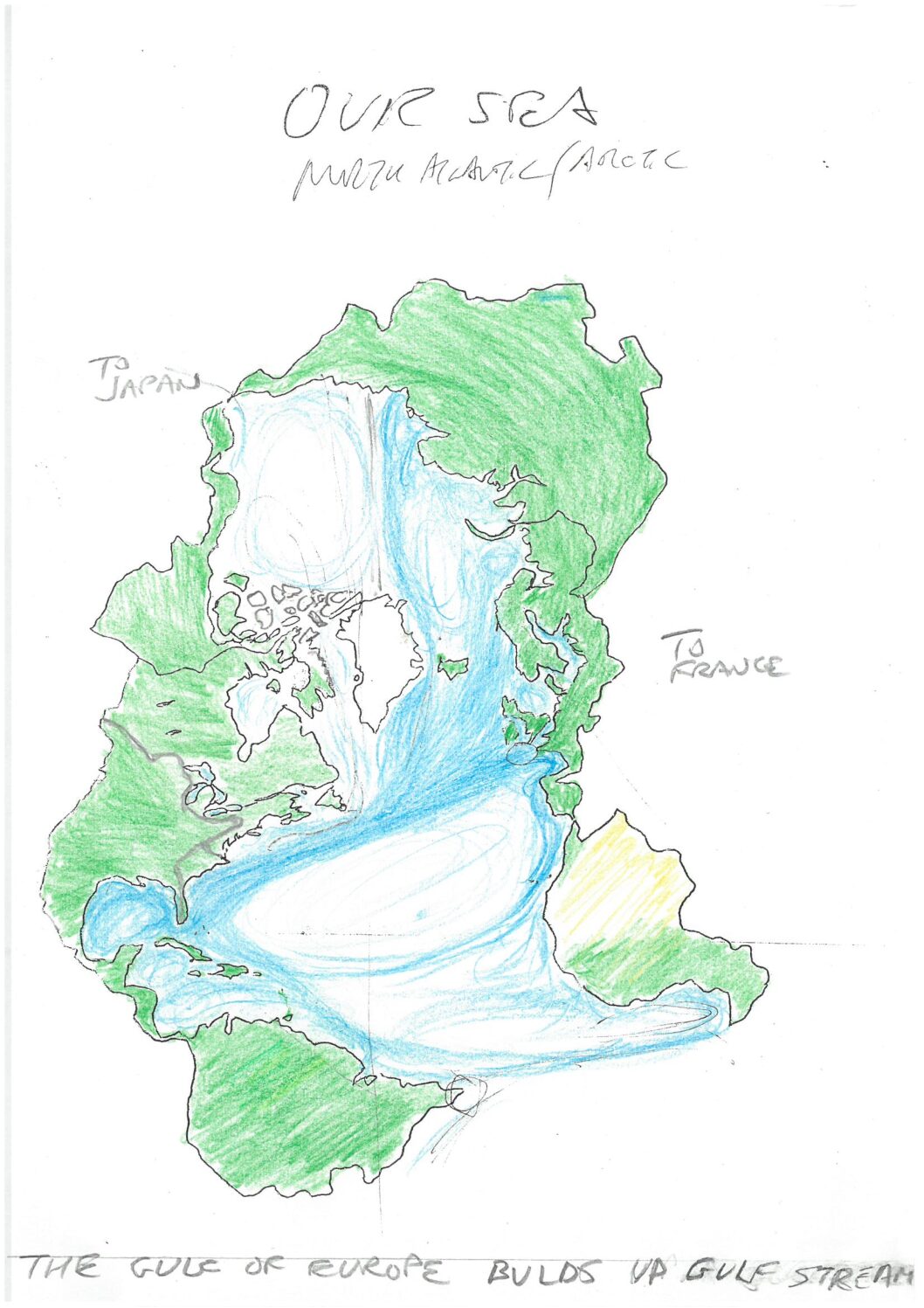
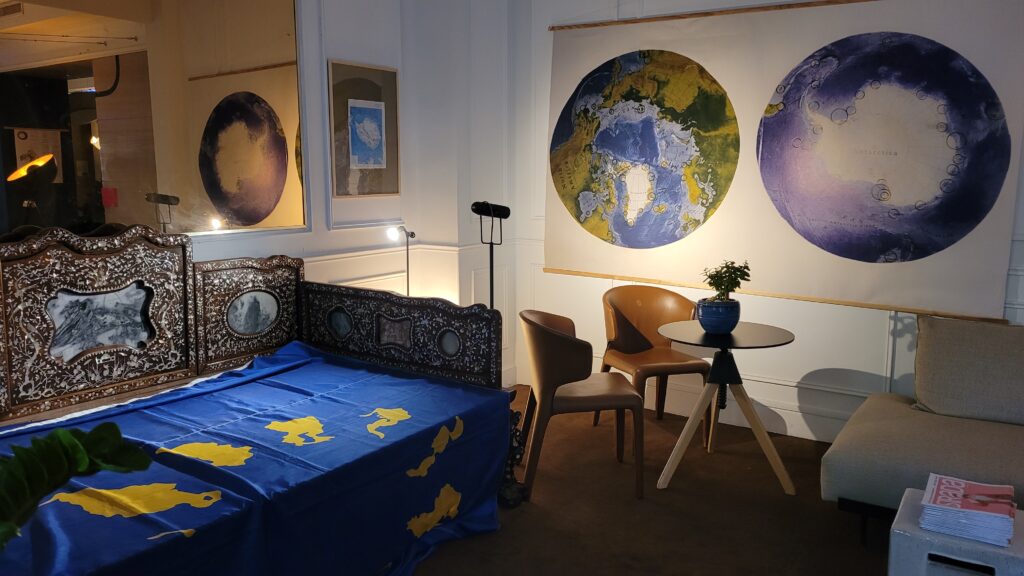
Physiocratics States, Champions of the Seas
2025
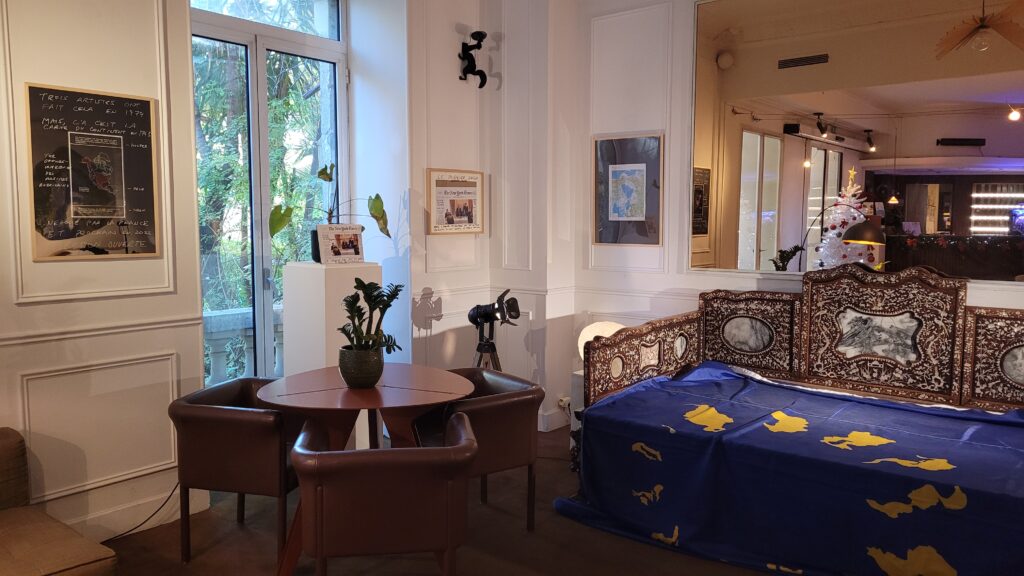
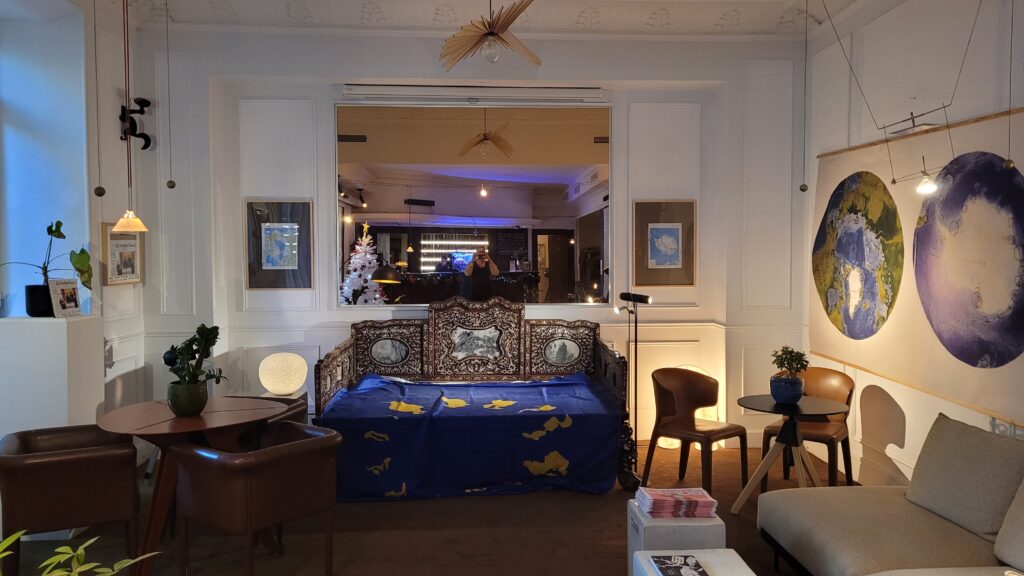
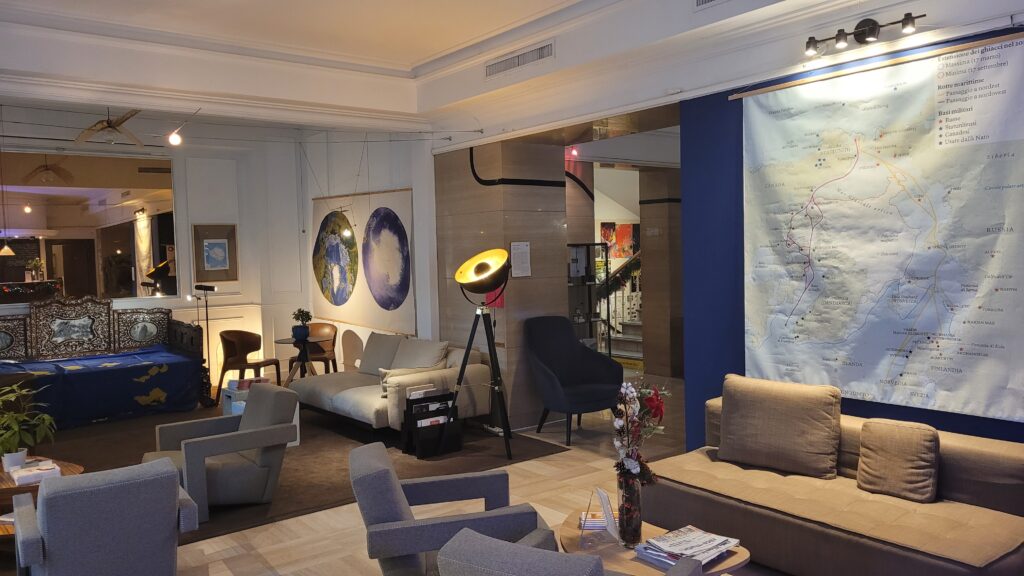
The American artist Peter Fend creates in situ scenarios aimed at improving the world of living beings, social relationships, and other bio-political chimerae. His entire body of work utilizes the codes and representations of both art and architecture to develop practical solutions to the economic and ecological crises of our current societies. He has indeed invented a methodology of performance that connects major global issues with the vernacular gestures of everyday popular life. Peter Fend presents himself as an activist, an expert, a craftsman, a conceptualist, a realist, a fantasist, a mad scientist, all in proportion to the scale of his various projects, which are infused with a burlesque obviousness. To communicate his artistic strategy, he produces artifacts—maps, flags, models, and even land shaped into crude topographic silhouettes—against the diversion of aquifers, the construction of dams, the redirection of rivers, and polluted lands, from Greenland to the Gobi Desert. All his works or projects are accompanied by textual productions that self-sustain in an eternal energy, under all circumstances. Together, they create an ambivalent environment: the aesthetic exercise is both abstract and spectacular, encompassing a complex spectrum of verified and verifiable scientific information. Peter Fend’s ambition is to inject artistic creativity into scientific methodology, and vice versa. His enterprise is to create the conditions for a conversation between two parties that do not listen to each other attentively enough, resulting in surprising communication breakdowns. The artist’s verbal intervention in a powerful polyglot charivari structures his conceptual universe. This exhibition revisits the rhetoric and artistic gesture of Peter Fend, who tirelessly translates the economic and geopolitical realities of governmental powers in their closely intertwined relationships. – Hôtel Windsor /OVNI
Nicolas Rubinstein
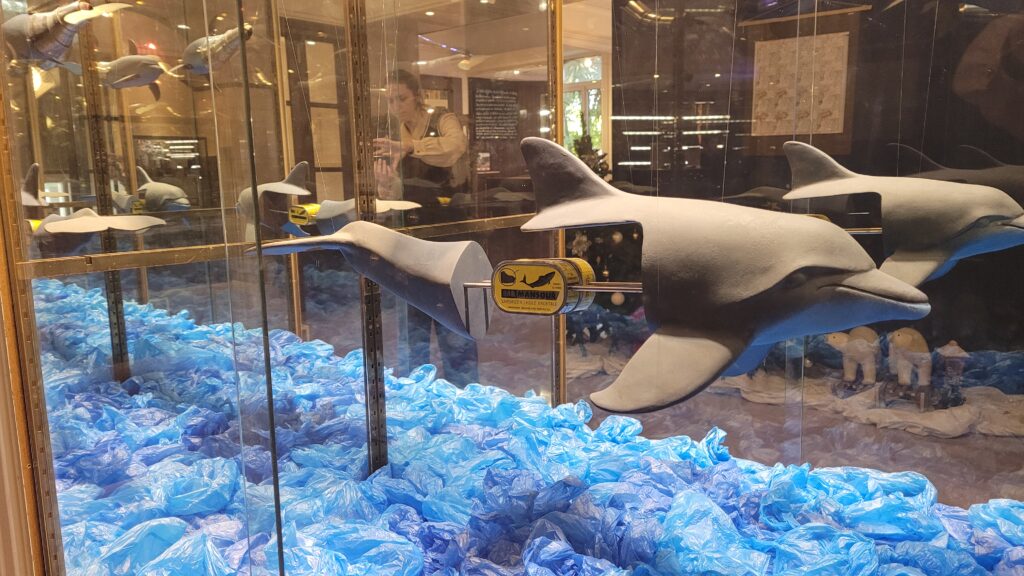
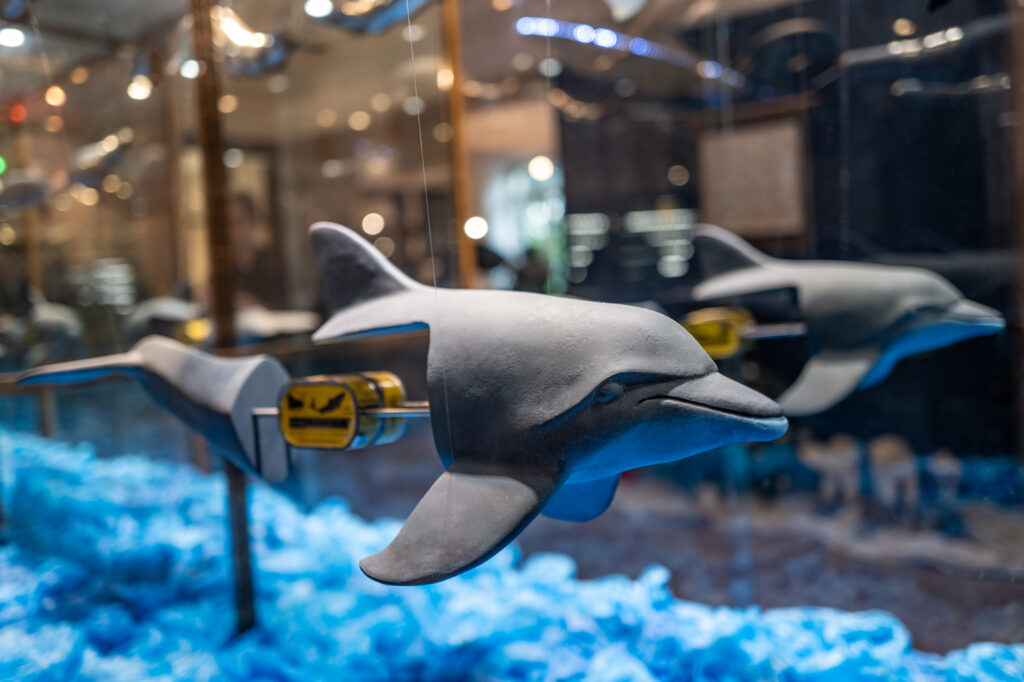
Plastiques et Conserves (Plastics and Cans)
2025
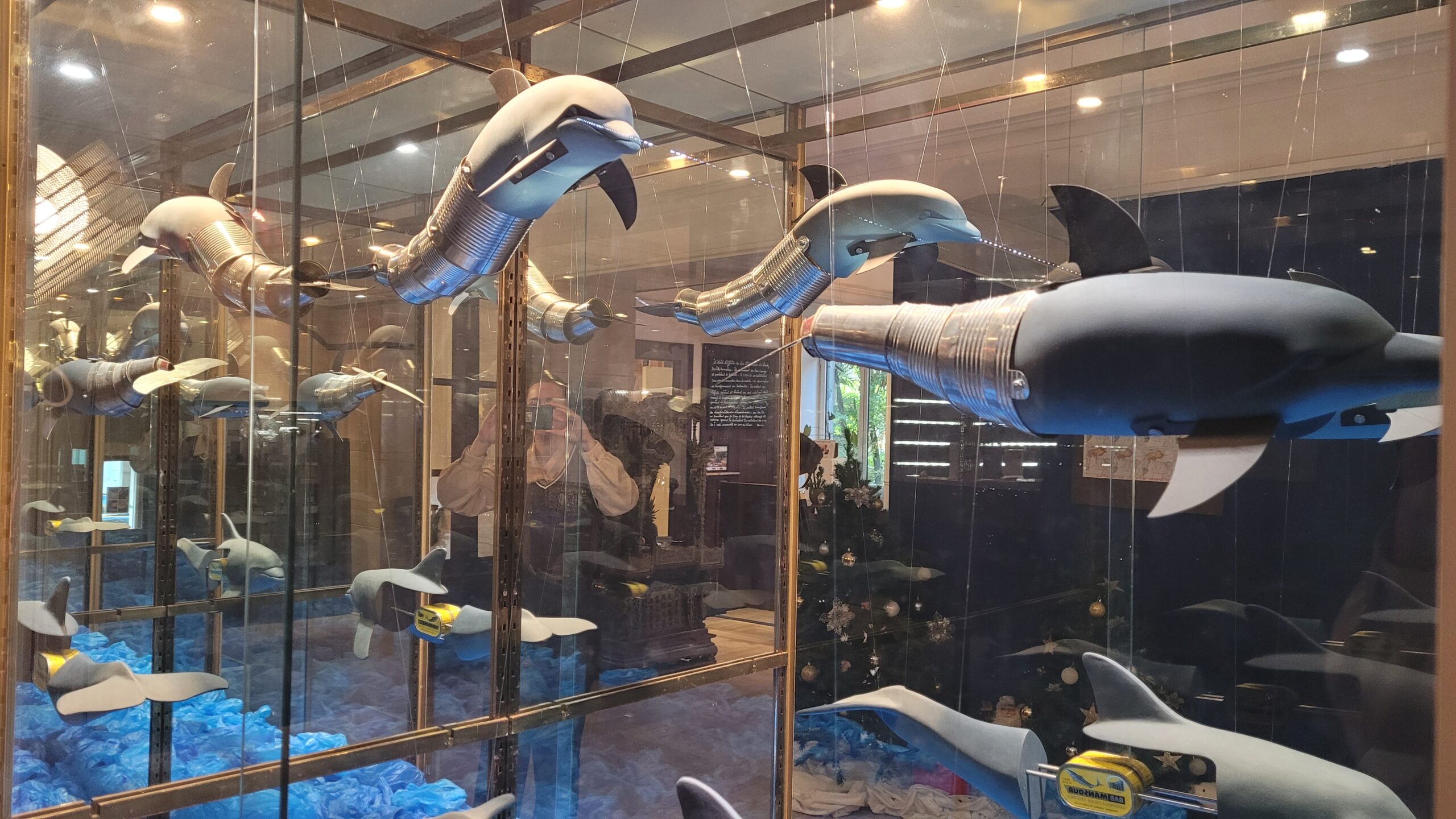
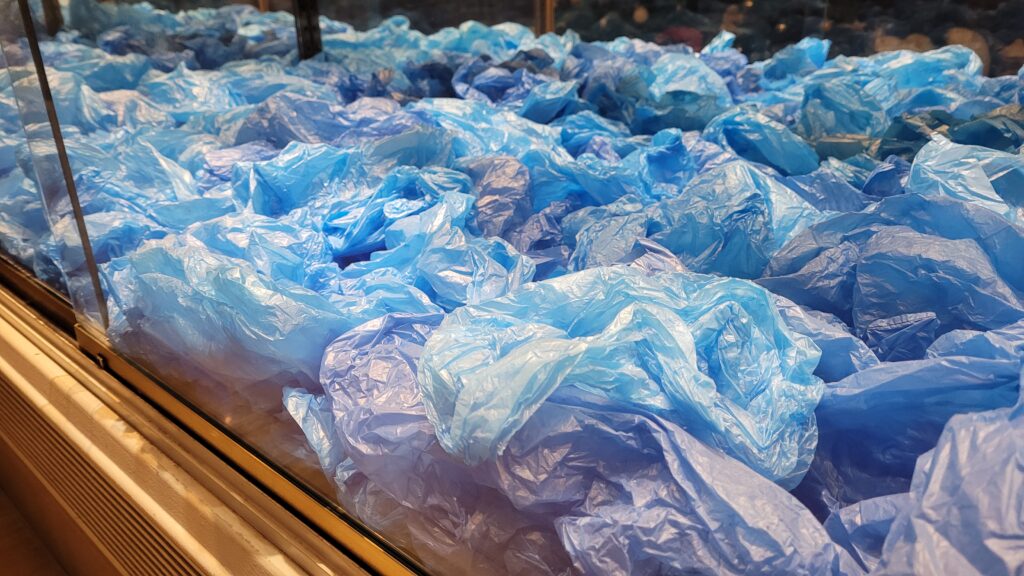
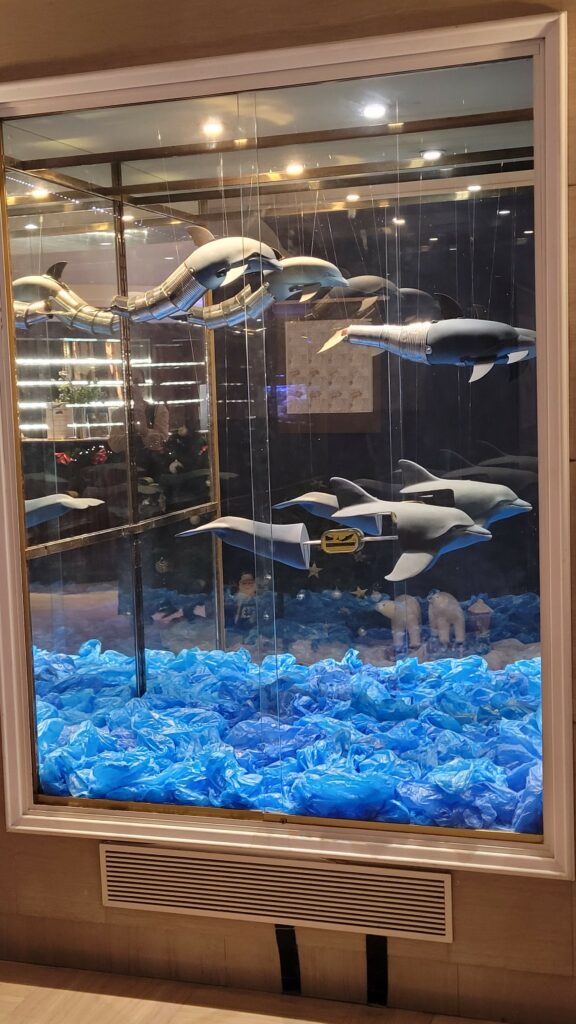
“Each of us, to varying degrees, is aware of the damage caused by human activity on our environment and the necessity to take great care of our planet. Marine pollution is one of the most visible subjects of ecological disaster and has concerned me since my childhood.
As a child, when I practiced sailing in an Optimist dinghy in Brittany, I would try to collect the debris floating on the water’s surface in my little boat. Even then, I noticed an alarming concentration of plastic. In 1978, I was confronted with the dramatic consequences of the sinking of the Arctic Cadiz.
Today, the situation has deteriorated considerably. We now speak of several continents of plastic drifting in the oceans, and the oil spills that have sullied our blue planet have become too numerous to count.
Rather than issuing moralizing commands that are meant to create a sense of guilt without a guaranteed outcome, I prefer to awaken the curiosity and intelligence of the viewer through humorous, striking, and easily accessible visual works. Like a bottle thrown into the sea, this message is my contribution to this essential cause.”
Nicolas Rubinstein
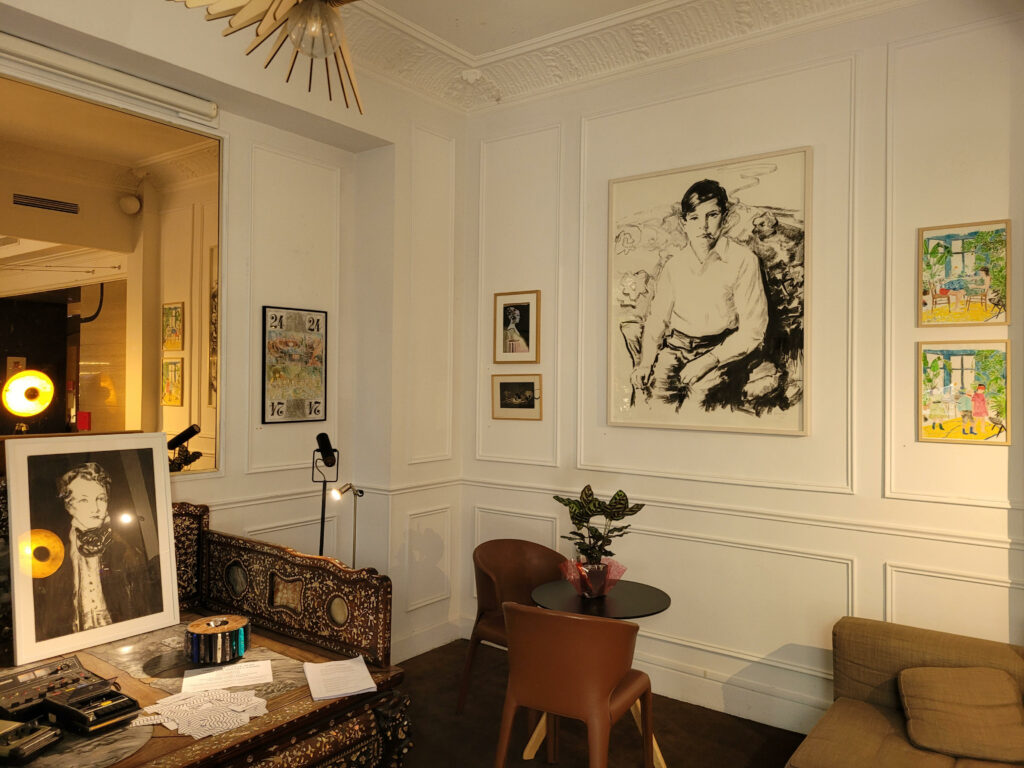
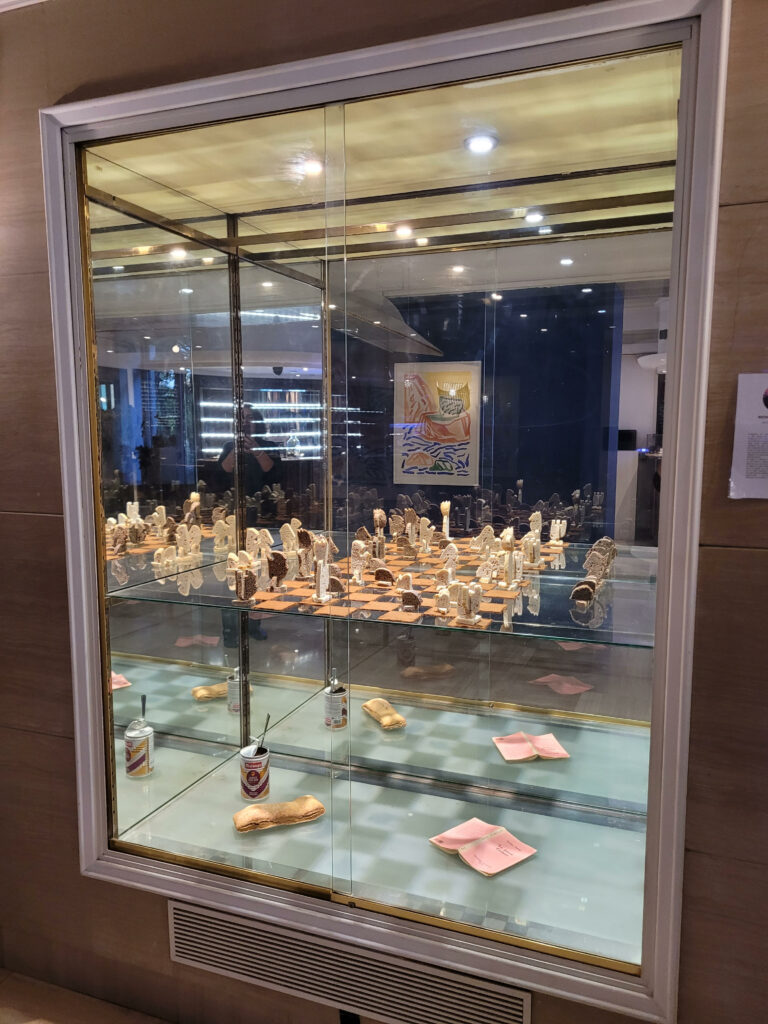
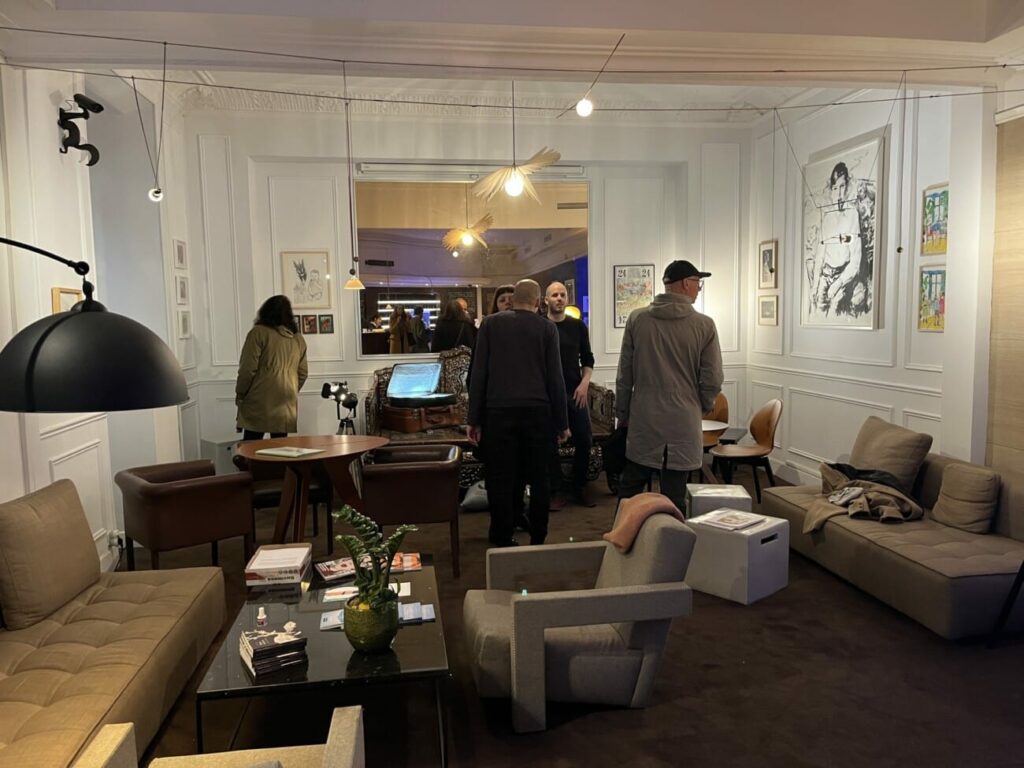
Group Exhibition: Playful Spirits
Curator Julien Griffaud
2024
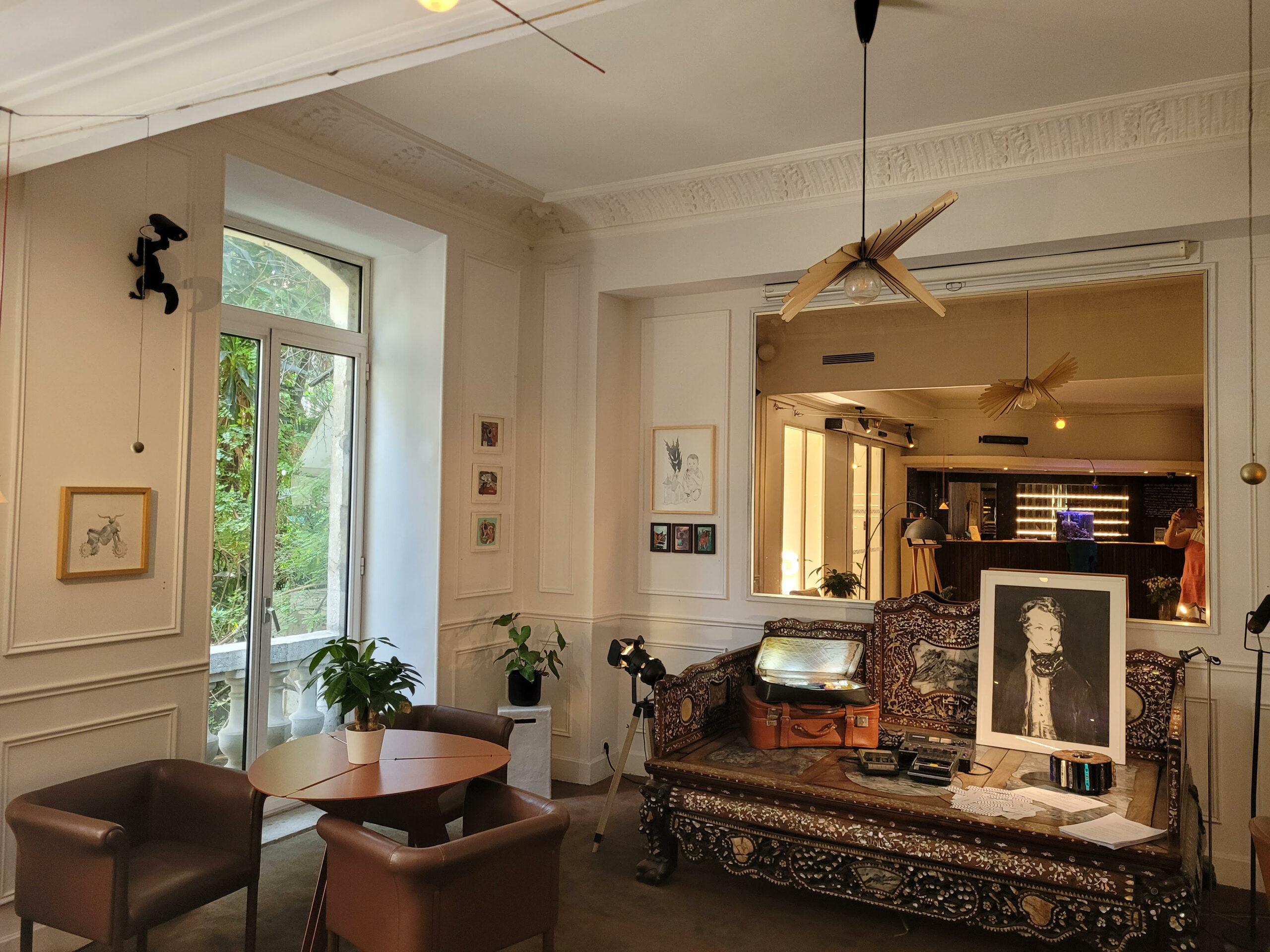
When it comes to play in art, the audience expects to be entertained, amused, but rarely disturbed. Apparently gratuitous and futile, often linked to childhood, play nonetheless offers a remarkable creative tool for subversion and transgression, and artists, as mischievous as they are, constantly reinvent new conventions and ways of ‘playing.’
There is no intention here to provide an inventory of the practices of play in art or to claim to reinvent the subject, but rather to infuse a certain ‘spirit’ into the unmissable space of the Hôtel Windsor…”
Julien Griffaud
with GERALD PANIGHI, CELINE MARIN, MAXIME PARODI, NICOLAS RUBINSTEIN, JEREMY GRIFFAUD, JULIEN GRIFFAUD, MARIE-EVE MESTRE, ROBIN GENOUX, LEO FOURDRINIER, MAKIKO FURUICHI, EGLE VISMANTE, CLAUDE VALENTI, FRANCOIS PARIS, LOIC ALSINA, GILLES MIQUELIS, QUENTIN SPOHN, BENJAMIN FINCHER, GHYSLAIN BERTHOLON”
Nicolas Rubinstein
Réparer le Monde, préparer le monde
2023
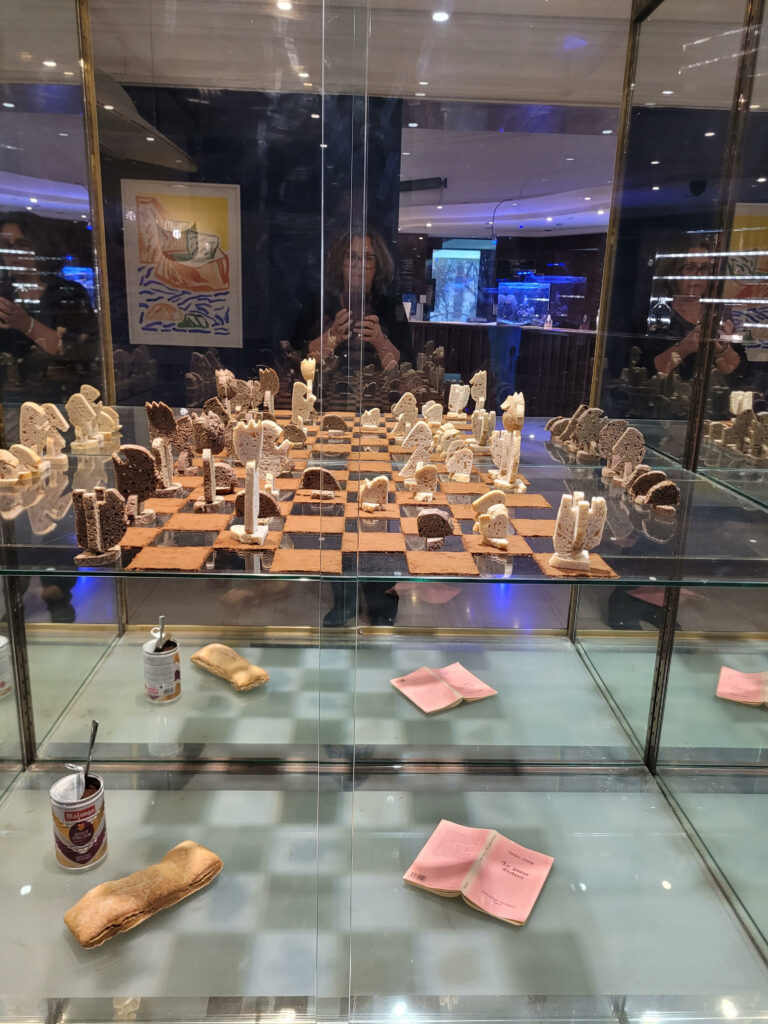
Nicolas Rubinstein has a singular artistic approach. He seeks to make bones speak and to construct with them a physical, mental, geographical, and even cosmic universe. For him, bones are a tool for exploring the forms that haunt him and that he wishes to revisit in order to communicate and transmit meaning.
For decades—indeed, for as long as he can remember—he has been working with skulls, vertebral columns, and all the bones he finds and collects (which he has cleaned by ants). His work has gradually been nourished and enriched by this practice. It has established itself both for him and for art enthusiasts, as well as for those who look beyond form to seek the hidden meaning of things.
Exposition collective CAMPING
commissaire Julien Griffault
2022
A powerful symbol of holidays and leisure, camping is also a social marker and a culturally loaded practice. Yet, since its early beginnings, this form of use has evolved. From wild camping to five-star resorts, including naturist sites, there is now a wide variety of approaches.
Camping offers unusual accommodations, with stays in caravans, yurts, or tree houses. Some sites now also provide swimming pools, playgrounds, concert stages, bars, mini-golf, nightclubs, yoga classes, and more.
As such, camping has become a collective life experience that is constantly reinventing itself, exploring new ways of spending holidays, building social connections, and sometimes even reconnecting with nature.
However, camping is not always associated with joy. For those who are resigned, disaster victims, homeless people, or displaced populations, camping quickly becomes a necessity stripped of any charm.
By setting up its “camp” at the Windsor Hotel, Camping proposes to explore, with a certain sense of distance and irony, the “art” of camping in all its forms—or almost all—questioning the practice itself while not ignoring its environmental impact.
With LOÏC ALSINA, SINEM BOSTANCI, FABIEN BOITARD, YANNICK COSSO, MAKIKO FURUICHI, JÉRÉMY GRIFFAUD, JULIEN GRIFFAUD, BENOIT GRIMALT, AJDA KARA, LA FRATRIE, LOÏC LE PIVERT, JEAN-PHILIPPE RACCA-VAMMERISSE, NICOLAS RUBINSTEIN, QUENTIN SPOHN, CLAUDE VALENTI.
Orlan
Le Plan du film
2021
The artist ORLAN, guest of honor at the OVNi 2021 festival, occupies the lobby of the Windsor Hotel with six light boxes from her series “The Film Plan” (1989–2001).
“[…] The Film Plan is a series of works conceived from reading a quote by Jean-Luc Godard: ‘The only greatness of Montparnasse 19 by Jacques Becker is that it is not only a film in reverse, but in a sense the reverse of cinema.’
My concept was to take Godard literally, to create a film in reverse, starting with the poster and promotion, including a trailer, a soundtrack, and a television program for the launch of the feature film.
I worked with an advertising agency, Publidécor, specialized in hand-painted cinema posters from the 1950s, with whom I created fourteen painted posters based on photographs of myself and recycled artworks. My intention, through these hand-painted acrylic posters on 3 m × 2 m canvases, was to recount my life in art by recycling images of my own works.” – ORLAN, excerpt from The Film Plan, 1989–2001
Benoit Barbagli
90° Au dessus du feu
2021
Benoît Barbagli exhibits in the lobby of the Windsor Hotel, focusing on a single medium: fire. Some members of the Collectif PALAM, to which he belongs, take over the garden space.
Photographs, sculptures, and paintings—all created and executed in natural environments—are presented as an attempt, at a time when the Amazon is burning, Australia is burning, and the era of fire seems to have arrived, to “re-supply” or re-engage with this phenomenon that is as dangerous as it is fascinating.
Nagham Hodaifa
toutes voiles dedans
2020
One month before the lockdown, I found myself in an artistic residency at the Windsor Hotel in Nice, invited by OVNi and Odile Redolfi, through the association Act by Art.
At first, I was reworking drawings of gloves and nightgowns—recurring motifs in my practice. One of my first completed paintings was Les Mimosas. It was during Carnival, and for me, the mimosa is the emblem of the city, of this luminous and radiant stay.
The azure blue gradually entered my painting through the contemplation of the Mediterranean Sea. Yet I could not forget the horrors this sea has witnessed over the past ten years. I decided to create a series of paintings titled Mediterranean. End of All Hope: a human project, a necessity, dedicated to all those whose dreams ended in the Mediterranean.
I then began working on polyptychs, a common process in my work. I did not know whether I would be able to complete this series. Indeed, the residency was originally supposed to end in mid-March…
The unthinkable—the “science fiction” film as I had imagined it—became reality when we began speaking about Covid-19, followed by lockdown. I had wanted to be confined in order to paint, but experiencing it as an obligation, like everyone else, went beyond imagination. I was then at the hotel, and Odile suggested I stay.
So I found myself in lockdown there, and paradoxically I had never had so much space to work. Suddenly, I had 57 rooms entirely to myself—both extraordinary and frightening. The hotel gradually emptied. I was neither psychologically nor materially prepared, as I did not have enough painting supplies to continue my work. I had arrived with a suitcase for one month; hotel rooms are not “studios,” so I worked with my supports placed on the floor rather than on an easel.
Fortunately, I found an art supply store where I could buy Arches paper—the beautiful paper I love working on, allowing me to use mixed media techniques as I have always done. I continued my series on the Mediterranean, without being able to go to the sea, whose access was forbidden throughout the lockdown.
I can only conclude here with Baudelaire’s Invitation to the Voyage at the Windsor, as everyone will cultivate their own dreams of exploration, setting down their suitcase in this place of rest and experiencing it in their own way. Living confined in a hotel remains exceptional. Travel and discovery are integral to my life. But I prefer to speak here of wandering. To leave is my destiny—it is a need.
“There, all is order and beauty, luxury, calm, and voluptuousness.”
Nagham Hodaifa, Nice, May 31, 2020
Guido Van Der Werve
2019
Guido van der Werve was raised learning classical piano before studying audiovisual arts at the Gerrit Rietveld Academie in Amsterdam. Although he quickly came to see himself as a performance artist, he never wished to perform live or restage his works; instead, he soon began recording his expeditions and actions.
As his practice developed, he became increasingly interested in cinema and cinematography, where he found an emotional immediacy comparable to music—something he felt was lacking in the visual arts. Performance remains the core element of his work, but he has incorporated music, text, sport, and atmospheric scenes as recurring components.
For the artist, the fact that a task is difficult is never a reason not to do it. In addition to being an accomplished musician and visual artist, he is also a triathlete and marathon runner. He combines these skills to create epic performances captured in meticulously crafted films. He is often the sole subject, and the scenes frequently involve projects requiring extensive planning, as they are dangerous or demand extraordinary endurance.
In Guido van der Werve’s videos, a human presence is always set within a distinctive atmospheric perspective, often against vast landscapes. This disproportion is intended to guide the viewer toward a metaphysical dimension, as described by the historian Christopher John Murray.
Bucolique ou presque
Commissaire Julien Griffault
2019
Artists: Simon Berard, Fabien Boitard, Jérémy Griffaud, Julien Griffaud, Aïcha Hamu, Laurent Perbos, Nicolas Rubinstein, Quentin Spohn, Anna Tomaszewski, Caroline Trucco
Since the 16th century, the tradition of landscape has been dominated by representations oscillating between idealism and the sublimation of reality. It is clear that when we traverse our territories, reality is often far less romantic than in a painting by Claude Lorrain, for example.
Bucolique ou presque (Bucolic, or Almost) focuses precisely on the gap that can exist between this reality and what is presented to the viewer. It thus becomes a matter of taking some distance from certain conventions, in order to propose alternatives that are both formal and conceptual.
And while neither Virgil nor André Chénier are directly invoked here, there nevertheless remains a certain idea of nature—one we hope is not devoid of poetry.
This exhibition is part of Des Marches, démarches, an exhibition organized by the FRAC PACA.
Jean Dupuy
Looping
2018
Anagrams
In 1979, I invented a writing system based on a selection of words representing colors, in order to solve letter equations: anagrams. In this way, I returned to color after having stopped painting in 1966.
I created large-scale anagrams, with on one side a list composed exclusively of color names, and on the other a narrative or the description of an object. Each of the two texts was rigorously composed using exactly the same letters as the other—no more, no less. A face-to-face anagrammatic structure in which one half (the palette) colored the other.
These equations, solved empirically, took me a considerable amount of time. They required me to give the texts in the lower section titles that were often obscure, especially since some equations exceeded a thousand letters.
I then had the idea of replacing the titles with musical notes from the scale, which I placed at the end of each text. In doing so, I gained both time and greater freedom in writing. Furthermore, I could sometimes interpret the musical notes as homophones (mi mi si la ré: mimi scie la raie—a cruel music).
Then, to go even faster, under the pseudonym “Léon Bègue,” I wrote the way a stutterer speaks, doubling, tripling (and more) the syllables.
Finally, in the late 1990s, I found the last method: a simple layout—placing the color words and the musical notes on either side (top and bottom) of the letter equation.
Today, I do not see how I could go any faster in solving such anagrams. What remains, however, for each text, is to find the right tone to express what I want to say—something that, of course, escapes any method.
Jean Dupuy, 2006
Emma Picard
2018
The Windsor Hotel, nestled in its green setting in the heart of the city, was the ideal place to conclude a four-year cycle of work during which Emma Picard, among other things, highlighted the poetic potential—light, almost immaterial, yet profound—of this rare material: leaf skeletons.
2014: The commemorations of 1914–1918 begin, while war rages in Syria. Emma Picard starts to revisit one aspect of “trench art,” practiced by soldiers, which consists of hollowing out leaves down to their veins and sometimes piercing them with intimate messages. Working with Syrian refugees in Paris, and through the universal language of sewing, they recreate the destroyed architecture of the city of Aleppo as a lacework of leaf skeletons.
2018: The final year of the First World War commemorations; perhaps also the final year of the war in Syria? The lace of leaf skeletons is pierced with inscriptions—Syrian first names written in Latin or Arabic letters. To be experienced “with a flower in one’s rifle,” yet with lightness.
Emma Picard’s work, diverse in its use of media, reflects a tendency toward “social sculpture,” combining a wabi-sabi aesthetic of the ephemeral and the fragile with a spirit of sharing inherited from Fluxus. She has created a new material—a natural lace made of leaf skeletons—through which she integrates the universal language of sewing into her sculptures. She first collaborated with Moroccan craftswomen for Puisque tout passe, and later with Syrian refugees in Paris for Alep était florissante.
The same search for a shared artistic experience drives her series of 3D Mandala Portraits, a literal immersion of the subject into a bath of pigments, combined with a shared journey to the source of these colored earths (Kassel, Venice, Cyprus…).
In 2018, she also began a new cycle of collaborative sculpture with bees, becoming the artist with the largest number of assistants in the world (40,000). Their joint work was to be presented in a second phase at the beginning of June.
Noel Dolla
Plis et Replis d’Hotel
2017
KKF
Les fleurs des mâles
2017
The artists of the Collectif KKF, invited by the Windsor Hotel and inspired by its unsuspected garden, propose the creation of a complete fictional plant universe, inhabited by sculptures and assemblages that are characteristic of their work.
This original installation, composed of six pieces—including four large-scale works created specifically for the site—stands as a tribute to Nature, to Creation, and more broadly to femininity. With the collective’s characteristic humor, it explores the relationships between masculine and feminine.
It also pays homage to the time required for blossoming, both vegetal and artistic. Through this exhibition, presented in the entrance and lobby of the Windsor, the artists invite visitors to become wanderers in their garden, encouraging a flâneur-like spirit to drift between imagination and interpretation.
Pierrick Sorin
2016
Presented as holograms, created through a clever play of reflections, the artist appears in short scenes that immerse curious visitors from Nice and hotel guests alike in a burlesque and offbeat imaginary world, where irony and literal humor coexist.
It is with great pleasure that we rediscover the great trademarks of Pierrick Sorin—disguise, comic repetition, and music-hall gags—in a series of six optical theaters, along with preparatory visuals accompanied by texts. Beyond the playful, mischievous, and humorous aspect of his works, Sorin maintains a critical perspective, successively poking fun at the banality of everyday life, the media, cinema, cultural institutions, contemporary art, and above all the figure of the artist.
Everyone is targeted, and everything is critiqued without distinction. Between autofiction and imagined narratives, he multiplies identities, becoming a comic and dramatic anti-hero.
Thus, this insolent and playful illusionist characterizes his artistic approach as follows:
“My artistic practice questions the meaning of existence. But sometimes I come up with something that simply makes me laugh, without any deep meaning. Then I hesitate, because I don’t want to fall into mere spectacle. In the end, I go for it anyway—because I like it when it’s funny.”
Show me the way
Commissariat Julien Griffault
2016
Artists: Loïc Alsina, Olivia Borg, Asmaa Betit, Patrick Durand-Walworth, Léna Durr, Ajda Kara, Jérémy Griffaud, Julien Griffaud, Benoit Grimalt, Thierry Lagalla, Loïc Le Pivert, Gérald Panighi, François Paris, Nicolas Rubinstein, Jérôme Souillot, Quentin Spohn, Jean-Philippe Racca-Vammerisse
Referencing the famous song Alabama Song by Kurt Weill and Bertolt Brecht, later successfully covered by The Doors, “Show me the way…” explores the relationship between the hotel and music—whether through the hotel room, the motel, or the bar.
In this perspective, the Windsor Hotel appears as the ideal venue in Nice to host the exhibiting artists. This exhibition is part of the Easter in the Sun festival, which took place from April 14 to 17, 2017.
Nicolas Rubinstein
Bar barrit
2016
A pink elephant trumpeting amid flying bottles—a memory of Dumbo and unforgettable drunken nights—a fantastical flight between intoxication and reality…
Alaleh Alamir
Brèves en suite
2015
Alaleh Alamir is an artist of Iranian origin from a multicultural background. She earned a degree in Art from Reed College (Oregon), a Master of Fine Arts from the Parsons School of Design (New York), and then pursued doctoral research in painting at New York University, focusing on color perception.
She is an elected member of the Royal British Society of Sculptors, and her work has been presented at venues such as the Royal Academy Summer Exhibition in London and Magic of Persia in Dubai, as well as at fairs including Arts Libris, Estampa, and ArtistBook International.
Having immersed herself in the cultures of the many countries in which she has lived, she speaks several languages fluently. In her artistic practice, she has sought to synthesize very different traditions. To better understand her approach, it is important to note that from an early age, Alaleh has searched for cultural correspondences. Over the years, she has explored numerous media, yet far from being fragmented, her body of work consistently engages with her inner journey in a highly personal dimension.
One of her main sources of inspiration remains Nature, which is evident in most of her projects. Alaleh is particularly known for her installations and her mastery of printmaking and drawing, which she often presents in series. Her practice aims above all to convey intellectual honesty while maintaining a lyrical dimension.
For her exhibition Brèves en Suite, she will present a selection of elements drawn from her large-scale installation Ark of Hesperides. The Hesperides (bagh-e hooriyan-e ferdows) is a concept she has explored and developed for many years. The idea of the garden originates from a central theme in Persian culture, which she combined with that of hoorian-e beheshti (the nymphs of paradise), before realizing that a similar notion exists in European tradition as the “Garden of the Hesperides.”
Ultimately, Alaleh’s garden is a mystical aspiration—a concept and a poetic vision.
Cynthia Lemesle et Jean-Philippe Roubaud
Fenêtre sur…les oiseaux
2014
For a long time, Cynthia Lemesle and Jean-Philippe Roubaud exchanged “culinary” recipes and theoretical reflections on their respective practices within a shared studio. From this close interaction of hand and mind arose the obvious need to bring their singularities together by co-signing a prolific body of work.
It would be futile to try to determine who does what in this collaboration: working four-handed, they create surprising objects that unabashedly recycle, across all directions, the long and fruitful history of representation—from ancient myths to modern computer screens, via the Flemish Primitives. It is hardly surprising to see eras and styles collide within this profusion of references.
In this baroque and festive disorder, anything goes: pattern painting bursts into Audubon’s ornithological plates, grandmother’s crochet takes on the role of the sculptor’s mass, Narcissus appears as a moorhen, and so on. In this realm of deconstruction, mimesis still reigns supreme: here, digital printing, taxidermy, and bullion stitch become motifs just as millefiori once did.
Playing with the coexistence of various systems of representation from the history of Western art, Cynthia Lemesle and Jean-Philippe Roubaud renounce nothing. From figuration and abstraction, from painting and the readymade, they retain the best, embracing the impurity and hybridity of a culture that celebrates the omnipotence of the pictorial image.
Exhibition: November 2013 – October 2014
Gilbert Pedinielli
Marylin voit double
2013
Elodie Lecat
« Check In », Artiste invité Guy Rottier
2012
Élodie Lecat exhibition “Check In” (2012)
with the participation of Guy Rottier (Oct 2011 – Oct 2012)
Drawn from a familiar context, close to their installation, the set of images in Check In invites us to let ourselves be absorbed by the hotel garden and to observe it taking shape in the lobby, within a movement that is both internally and externally blurred.
The small becomes large, objects shift, light and plants manage to unsettle us, yet none of this distances us from the invitation that is extended to us. Beyond the idea of a stroll, Check In speaks as much about the importance of being fascinated by a certain form of nature as it does about a way of evoking what happens beyond it, through it.
This invisible dimension tends toward surprise and toward the possibility of moving across all dimensions from what surrounds us. Guy Rottier’s birds flutter through the lobby with humor.
Ben
Suspense au Windsor
2011
Suspense at the Windsor.
Mauro Benetti
Nouvelle floraison
2011
I cut the armchair that, for years, had represented a wall of incommunicability, involving both the conscious and the unconscious while simultaneously opening a gateway to very profound truths, as if the very essence of being were speaking: light and shadow, negative and positive, exterior and interior.
Light and shadow give rise to primordial images that contain everyone’s destiny. It is an opportunity to encounter our differences and our similarities; each person can become a point of reference for someone else.
By cutting it, I realized the force that came from separation: a reflection had slowly formed within me that allowed me to see it as a cage, as a trap.
I am very fond of the idea of capturing light—the light of emotions, the light of a face. Indeed, trapping light is a way of denying the trap itself.
The artist is behind it, like bait, the luminous idea—the truth that is trapped within everyday life.
I like the armchair in which people can tell their stories, the armchair that supports us. We need our legs, and the legs appropriate stories; they become columns that define emptiness, giving it a precise value and a place one can enter.
This is the idea of the moon on the canvas: glimpsed from afar, experienced in a single instant of intuition, a luminous point, awareness of partiality and embodiment, a source of light that captures the gaze.
It is through the gaze that we can enter the atmosphere of these reds, into the dawn of rediscovering ourselves, in search of great emotions and deep sensations that touch our inner spaces.
In these works there is a place of silence that calls identity into question, making it belong to something entirely different, indifferent to all of this. As if this nothingness were what supports us.
The armchair burns, and at the same time fire burns our thoughts, desires, and memories; it reduces past and future to ashes, erasing everything we think we are.
It is a death and at the same time a rebirth that gives us a new vision of life and makes us become artists of life itself, through the loss of identity.
It is not a question of art objects but of seeing things from an artistic point of view.
There is a greatness of being when intensity is total, when nothing is held back, when one sings in such an all-encompassing way as to disappear into the song, when one loves so infinitely as to reach annihilation.
One simply becomes the energy called love.
Kristof Everart
Scénographie géographique
2010
Geographical Scenography, an installation by Kristof Everart (2010) (Galerie Sandrine Mons).
According to the artist, geographical scenography is an extrapolation, a point of view on a position that has the particularity of being in motion. The captured landscape is in fact only a pretext to evoke movements and transformations, from which a pictorial gesture emerges.
Kristof Everart’s production of works has naturally oriented itself toward this idea of circulation, flow, and transformation—central to his practice for several years.
This installation is accompanied by screen-printed works, manually produced on aluminium, sculptures made of colored threads, and other “models” by the artist.
Aicha Hamu
2009


Cedric Teisseire
u0022Nadiru0022 – Invitée Smarin
2008